
Many of us with ADHD struggle to keep our thoughts organized – especially during busy periods of transition. (I’m looking at you, back to school season!) Fortunately, there’s a tool that can help: mind mapping.

Mind mapping is a visual strategy that allows you to efficiently:
- Break down complex projects
- Plan detailed events
- Solve intricate problems
- Brainstorm new material
Intrigued?
You’re in the right place.
On episode 266 of the I’m Busy Being Awesome podcast, we explore how mind mapping can support your ADHD brain by bringing greater clarity and structure to your busy life.
Whether you’re new to mind mapping or looking to refine your skills, this episode is here for you.
We’ll cover the benefits of mind mapping and how to use it both personally and professionally as you stay on top of your busy life. With practical examples and this free workbook, you’ll be ready to harness the power of mind mapping in no time.
You can listen to the episode above or stream it on your favorite podcasting app here.
Prefer to read? No problem! Keep scrolling for a summary of the key takeaways.
You’ll discover:
- What mind mapping is, and why it’s so supportive for an ADHD brain
- A step-by-step guide to different mind mapping approaches
- How to apply mind mapping to both your personal and professional goals
This post contains affiliate links, meaning I may earn a small commission if you make a purchase through my links, at no extra cost to you. Disclosure info here.
Episode #266: Mind Mapping for the ADHD Brain (Transcript)
Can you believe we’ve reached September? The school year is officially here. I know this time of year can leave many of us feeling discombobulated with all the changes and new routines.
Today, I wanted to offer some support to help us get a bit more grounded and feel more in control of all the different moving parts.
We will dive into mind mapping – a visual organizational strategy that can help us break down big projects, think through problems, and make detailed plans.
If you’ve never heard of mind mapping before, don’t worry—I’ve got you. And if you’re already familiar with it, stick with me because we’re going to explore some different ways you can use it in your life that I think you’ll find helpful.
First Download the Mind Mapping Workbook…
It’s packed with different templates and step-by-step instructions so you can put what you’re learning into practice immediately.
👉 Download at imbusybeingawesome.com/mindmap or tap on the image below to access…

What is Mind Mapping?
Mind mapping is an organizational approach that allows us to visually structure information around a central theme.
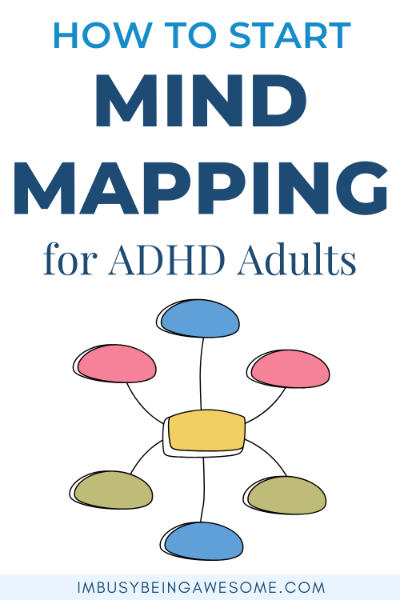
Imagine a diagram where you have a central idea placed in the middle of the page (or screen), with related ideas, tasks, and concepts branching out from it.
This structure is often hierarchical or radial, allowing you to make connections between different ideas and seeing relationships between these different pieces of information.
Example: Use mind mapping to plan a vacation
Your central idea could be the vacation, with branches for travel arrangements, accommodations, and activities.
This approach helps generate and organize ideas in a free-form manner, making it great for brainstorming. It’s also fantastic for problem-solving and breaking down complex problems into smaller, more manageable parts to help you understand what’s happening and find solutions.
I particularly love using mind maps for learning. They help you understand how different concepts are related, and the visual component—bringing in color coding or icons—can help lock information into your mind in a new way rather than just reading through notes.
We’ll dive into more specifics and examples, but again, I really love mind mapping for so many different reasons.
I find it especially powerful for visual learners, and those of us who tend toward non-linear thinking—our brains often jump from idea to idea rather than following a straight line.
Mind mapping is a fantastic tool for organizing those thoughts and ideas in a way that makes sense to us.
Uses of Mind Mapping

Now that we have a general understanding of mind mapping, let’s talk about how to use it in different areas of our lives. Mind mapping is incredibly versatile, and there are many ways to incorporate it into your routine.
Here are a few key uses:
Planning
Mind mapping is fantastic for planning, whether organizing a project or planning a vacation.
For example, let’s say you’re planning a vacation. You can start with the central idea of “vacation” in the middle of your page.
From there, you can create branches for travel arrangements, accommodations, activities, and packing lists. This approach helps you break down the planning process into manageable chunks and ensures you don’t miss any important details.
Brainstorming
Another great use of mind mapping is for brainstorming. This technique helps facilitate both generating and organizing ideas in a free-form manner.
You can start with your main topic in the center and then let your ideas flow, branching out from the center with related thoughts and concepts.
For instance, if you’re brainstorming ideas for a new project at work, you can have the project’s main goal in the center and then create branches for different aspects like marketing strategies, budget considerations, potential challenges, and so on.
This method helps you capture all your ideas in one place and see how they connect.
Problem-Solving
Mind mapping is also a powerful tool for problem-solving. It can help you break down complex problems into much smaller, more manageable parts, making it easier to understand what’s going on and find solutions.
Example: If you’re dealing with a complicated issue at work, you can start with the problem in the center and then branch out with possible causes, contributing factors, potential solutions, and resources needed.
This visual approach helps you see the bigger picture and identify connections you might not have noticed otherwise.
Learning
Lastly, I love using mind maps for learning. They help you understand how different concepts are related, making the information more memorable.
For instance, if you’re studying for an exam, you can put the main topic of your course in the center and then create branches for key concepts, important dates, theories, and figures. You can even add color coding or icons to make the information stand out.
This method not only makes studying more engaging but also helps you retain the information better.
Benefits of Mind Mapping for ADHD Brains
Mind maps offer a visual, engaging, and flexible way for ADHD brains to organize thoughts and ideas. They help us see the big picture, break down tasks into manageable steps, stay focused, and embrace our non-linear thinking.
Now, let’s talk about why mind mapping is a fantastic tool for ADHD brains. There are several reasons why this approach can be particularly supportive, and I want to highlight a few key benefits.
Visual Approach
First and foremost, mind mapping offers a visual approach that can be incredibly appealing. It allows us to see both the big picture and the details, helping our brains to more easily grasp the overall structure and the relationships between different concepts.
For example, imagine you’re creating a project plan. You can start with the project goal in the center and then branch out with milestones, specific tasks, deadlines, and resources.
This visual representation helps us see how all the different pieces fit together and understand how each smaller component contributes to the overall project.
Sequencing and Breaking Down Projects
Another significant benefit is that mind mapping facilitates breaking down big projects into smaller, more manageable steps. This is particularly helpful for those who struggle with sequencing tasks and understanding the steps required to achieve a goal.
For instance, if you’re planning a move, you can place “move” in the center of your map.
- From there, you can branch out with packing, hiring movers, changing addresses, setting up your new space, and cleaning the house you’re selling.
- Each branch can have sub-branches with even more detailed tasks, making the whole process much less overwhelming.
Active Engagement
Mind mapping is also an interactive process, which can be very engaging. When creating a mind map, you’re often drawing, coloring, or arranging information on a screen.
This hands-on nature can help maintain focus and interest, especially compared to linear note-taking or outlining approaches.
Example: When studying, instead of just reading through your notes, try putting the information into a mind map. This way, you can see all the related connections between different topics, making the study process more engaging and helping you retain the information better.
Non-linear Thinking
Finally, mind mapping celebrates and supports non-linear thinking, which is a natural fit for many of us with ADHD. Our brains tend to jump from idea to idea rather than following a straight line.
The mind map approach embraces this non-linearity, allowing for free-form thinking and the ability to jump between ideas.
During a brainstorming session, for instance, instead of listing all the steps in a linear fashion, you can create a mind map. You start with the main topic in the center and add different branches for the various categories and ideas.
This flexible approach lets you see connections and relationships as they come up, making it easier to organize your thoughts.
The Core Parts of a Mind Map
Let’s dive into the components of a mind map and how to create one. Understanding these elements will help you make the most out of this powerful tool.
1. Central Theme in the Middle
Every mind map starts with a central theme, which is the main idea or topic you want to explore. This central theme is placed right in the middle of your page or screen and acts as the starting point from which everything else branches out.
2. Branches Representing Major Subtopics
From the central theme, you draw branches that represent major subtopics or categories related to your main idea. These branches are like the main arteries of your mind map, connecting the central theme to the various key components.
3. Sub-branches for Additional Details
Each major branch can then have sub-branches, which delve into more specific details or related ideas. These sub-branches help break down the information further, making it easier to understand and manage.
4. Use of Colors, Images, and Keywords for Clarity
One of the great things about mind mapping is the ability to use colors, images, and keywords to enhance clarity. Color coding different branches can help visually separate sections and make your mind map easier to navigate.
Adding images or icons can make certain ideas stand out, and using keywords allows for quick reference without getting bogged down by too much text.
How to Create A Mind Map

Now that we know the components let’s talk about how to create a mind map. There are several approaches you can take, and I’ll walk you through a few of them.
Hand-Drawn Map
The simplest and most free-form approach is the traditional hand-drawn map. Grab a piece of paper and draw a circle in the center for your main topic. From there, draw branches to represent the major subtopics and add sub-branches for additional details.
This method is great because it gives you total freedom to draw and connect ideas as they come to you. In a very meta way, I created a mind map for this episode on mind mapping, which I’ll show on YouTube.
Using Mind Mapping Templates With Adult ADHD
If you’re new to mind mapping or want a bit more structure, you can start with pre-drawn templates.
These templates provide a layout that you can fill in with your own information, making the process less overwhelming. Templates can be particularly useful for creating study schedules, project plans, or any other structured task.
👉 Reminder, if you want my workbook filled with different mind-mapping templates, it’s totally free at imbusybeingawesome.com/mindmap.
Digital Mind Map Tools
For those who prefer digital options, there are several great tools available. Here are a few of my favorites:
Digital tools offer many benefits, such as easier collaboration, cloud storage, integration with other apps, and the ability to edit and rearrange your map quickly. I use Miro the most, although I still love the tactile experience of hand-drawn maps.
Digital mind maps are especially useful in collaboration settings where team members can contribute and see updates in real time. They also work well for more complex or ongoing projects since you can easily adjust and manipulate the content.
–
Whether you choose a hand-drawn approach, use templates, or go digital, creating a mind map is a straightforward process.
Start with your central idea, add major branches, and then flesh out the details with sub-branches. Incorporate colors, images, and keywords to make your map clear and engaging.
3 Steps to Create a Mind Map
Alright, let’s get into the details of creating a mind map. This process is straightforward and can be incredibly fun. Here are the essential steps to get you started.
1. Choose Central Idea
First things first, choose your central idea. This is your main topic and it goes right in the center of your page or digital canvas.
This central theme is the anchor point from which everything else will branch out.
For example, let’s say you want to improve office productivity. You’d write “Office Productivity” in the middle of your page.
2. Add Main Branches
Next, add the main branches. These are the key subtopics related to your central idea.
Think of them as the main categories or components contributing to your central theme.
For our office productivity example, your main branches might be:
- Workplace Organization
- Time Management
- Technology
- Team Collaboration
Draw these branches out from your central idea.
3. Expand with Sub-Branches
Now it’s time to expand with sub-branches. These are the related ideas or tasks that branch out from each of your main branches.
For instance, under “Time Management,” you might have sub-branches for “Prioritization,” “Scheduling,” “Delegation,” and “Taking Breaks.” Each sub-branch breaks down the broader category into more specific, actionable items.
Additional Mind Mapping Tips For ADHD
To make your mind map even more effective, here are a few additional tips:
- Incorporate Colors and Images: Use different colors to differentiate between branches. This makes your mind map visually appealing and easier to navigate. Adding images or icons can also help certain ideas stand out.
- Use Keywords for Quick Reference: Instead of writing out long sentences, use keywords or short phrases. This keeps your mind map uncluttered and helps you quickly recall the associated ideas.
- Personalize the Map to Suit Individual Preferences: Tailor your mind map to fit your style and needs. Whether you prefer a minimalist approach or something more detailed and colorful, make it work for you.
A mind map is a simple yet powerful way to organize your thoughts and ideas. Start with your central idea, add main branches, and then expand with sub-branches.
Don’t forget to personalize it with colors, images, and keywords. This visual and engaging approach can make a big difference in how you plan, brainstorm, and solve problems.
Practical Examples for Personal Use
Now that we’ve covered the basics of mind mapping, let’s explore some practical examples to help you see how you can apply this technique.
Goal Setting
One of my favorite ways to use mind mapping is for goal setting. It’s a fantastic way to map out personal goals for various aspects of your life, like health, relationships, and hobbies.
For instance, if you’re focusing on hobbies, you might put “Hobbies” in the center of your mind map.
Then, branch out with specific hobbies you want to explore or improve, like reading, crochet, horseback riding, or personal development.
Each hobby can have its own sub-branches detailing steps or milestones to achieve your goals.
Event Planning
Mind mapping is also incredibly useful for event planning. Whether you’re organizing a birthday party or planning a wedding, you can start with the event in the center and branch out with key elements such as the guest list, venue, food, and decorations.
These main branches can have further sub-branches for details like catering options, RSVP tracking, menu planning, and theme ideas. This way, you can keep all your planning organized and easily see what needs to be done.
Learning and Studying
For those of you who are students or lifelong learners, mind mapping can be a game-changer. When studying for an exam, you can put the course title or main topic in the center of your mind map. From there, branch out with subjects, key concepts, important dates, and figures.
This helps you visualize the entire course material and see how everything is interconnected.
For example, if you were studying American history, you could have branches for different periods, significant events, key figures, and underlying themes.
Examples for Professional Use
Project Management
In a professional setting, mind mapping is excellent for project management. You can map out the phases of a project, tasks, deadlines, and resources needed.
For example, if you’re managing a new project, put the project name in the center. Then, branches for project phases like planning, execution, monitoring, and closing will be created.
Each phase can have sub-branches for specific tasks, deadlines, and resources, providing a clear visual overview of the entire project.
Brainstorming Sessions
Mind mapping is also fantastic for brainstorming sessions. If you’re developing a new product, start with the product name in the center. Then, branch out with different aspects like features, target market, user interface, and marketing strategy.
This free-form brainstorming method allows you to generate and organize ideas quickly, making it easier to see connections and develop a comprehensive plan.
Problem-Solving
Finally, mind mapping is a powerful tool for problem-solving in business. When analyzing solutions for business problems, start with the problem in the center. Then, branches should be created for possible causes, contributing factors, potential solutions, and resources needed.
For example, if there’s an issue with customer satisfaction, you could have branches for service quality, product quality, communication, and feedback mechanisms.
Each branch can further break down into specific actions or strategies to address the problem.
Mind Mapping Recap & Final Thoughts
Mind mapping offers a visual, engaging, and flexible way to organize your thoughts and ideas.
It’s particularly beneficial for ADHD brains, helping to grasp overall structure, break down big projects into smaller steps, maintain focus through active engagement, and celebrate non-linear thinking.
Whether you’re planning a vacation, managing a project, brainstorming ideas, or solving problems, mind mapping can make a significant difference.
I encourage you to give mind mapping a try. It’s a simple yet powerful tool that can help you see the big picture and manage the details simultaneously.
Whether you’re tackling your next big project, organizing your daily tasks, or mapping out your thoughts for better clarity, mind mapping can be a game-changer.
👉 To help you get started, I’ve created a free Mind Mapping workbook filled with different mind-mapping templates. This resource will guide you through the process and give you the tools to put mind mapping into action today. Access here!
I’d love to hear about your experiences with mind mapping. Share your mind maps with me on social media and tag @imbusybeingawesome. I can’t wait to see how you use this technique to organize your thoughts and achieve your goals.
Links From The Podcast
- Learn more about We’re Busy Being Awesome here
- Learn about 1:1 coaching here
- Get the top 10 tips to work with your ADHD brain (free ebook!)
- Discover my favorite ADHD resources here
- Get the I’m Busy Being Awesome Planning System here
- Get the Podcast Roadmap here
- Get the ADHD Routine Revamp here
- Get your mind mapping workbook here
Leave IBBA A Rating & Review!
If you enjoy the podcast, would you be a rockstar and leave a review? Doing so helps others find the show and spreads these tools to even more people.
- Go to Apple Podcasts
- Click on the I’m Busy Being Awesome podcast
- Scroll down to the bottom of the page, where you see the reviews.
- Simply tap five stars; that’s it!
- Bonus points if you’re willing to leave a few sentences sharing what you enjoy about the podcast or a key takeaway from the episode you just heard. Thanks, friend!


About Paula Engebretson
ADHD COACH | PODCASTER
I spent the first 31 years of my life thinking I just needed to “try harder” while dealing with crushing self-doubt, perfectionism, and imposter syndrome. Then I was diagnosed with ADHD.
Finally understanding the missing puzzle piece, I discovered how to work with my brain, build upon my strengths, and take back control of my life.
Now I help others with ADHD do the same. Learn more.

