Hey, ADHDer — have you ever read (or listened to) a book that made you cry because you finally felt seen? And on the flip side… have you ever read a book that made you feel absolutely terrible, because no matter how hard you tried, you just couldn’t follow the steps? Same.
That’s why today I’m sharing eight of my favorite books that actually support ADHD brains. These are the ones that offer real insight, emotional grounding, and genuine encouragement to help you better understand yourself and your experience.

If you’ve been searching for books and resources that truly get your ADHD brain, you’re in the right place. These are the titles that made a huge impact on my life — and the ones I recommend to my clients again and again.
Let’s dive in.
Listen to the episode above or stream it on your favorite podcasting app. Prefer to read? No problem! Keep scrolling for a summary of the key takeaways.
In Episode 315 You Will Discover:
- Powerful books that help you feel seen in your ADHD experience
- The neuroscience of ADHD to work with your brain instead of fighting it
- Resources offering both validation and practical strategies you can implement today
Episode 315: 8 Must-Read Books for Women with ADHD (Transcript)
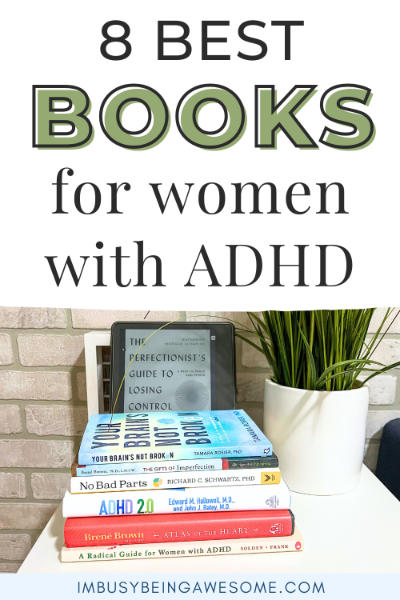
Today, we’re doing something a little different, and I’m sharing seven of my favorite books that I think are especially supportive for ADHD brains.
I’ve read and listened to hundreds of books over the years, and these are the books I keep coming back to and referring to others, as they offer genuine support for adults living with ADHD.
Whether you’re trying to better understand your brain and your ADHD experience or navigate big emotions with a little more ease, these books lay a solid foundation.
Books on Understanding ADHD
So let’s start with our foundation: understanding what’s actually happening in our brains.
These first three books are all about building that awareness and insight. Because if we jump straight into productivity systems without understanding our ADHD, it’s so easy to assume we “should” be able to show up like everyone else — and then beat ourselves up when we don’t.
But when we really understand how our brain works — why we struggle with motivation, why task-switching is so hard, why that one email feels impossible to answer — that’s when we can start building support strategies that fit. That’s when the self-judgment can start to quiet down.
So with that in mind, let’s dive into the first book on the list:
1. Your Brain’s Not Broken by Tamara Rosier
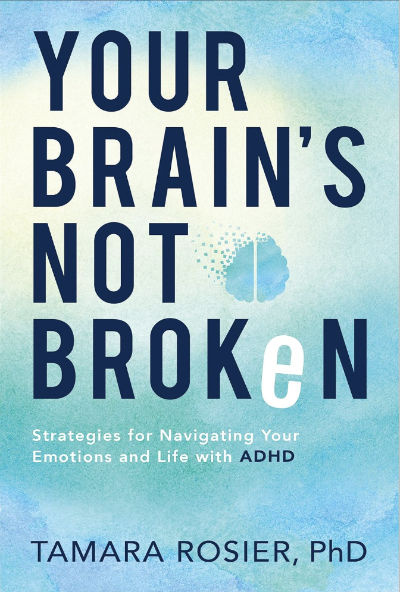
Your Brain’s Not Broken is my current go-to recommendation from Tamara Rosier . It’s the trifecta. It’s warm, relatable, and full of practical tools. I especially love how Rosier powerfully and clearly explains the connection between emotion and motivation in the ADHD brain.
If you’ve ever asked, “Why can’t I just do the thing?” this book answers that in a way that doesn’t leave you —as the title suggests — feeling broken. Rosier walks us through how emotional dysregulation impacts our executive function and gives clear, ADHD-friendly tools to work with our brains instead of fighting them.
It’s especially good if you’ve been hard on yourself for procrastinating, struggling to follow-through, or having big emotional reactions that don’t seem to make sense on the surface. It helps put a name to all of it — and then offers real strategies that are actually doable.
It’s also one of the most validating reads I’ve come across in a long time. So if you’re in a season of wanting to feel understood and get support you can use today, this is a great place to start.
Tip: If you usually read using audiobooks, give it a test run on Amazon before using your Audible credit. Rosier does NOT read this book, and while I absolutely love audiobooks generally, I found I got much more out of reading the physical copy of this book. So, give the audio version a test run first to make sure the narrator’s style is a great fit for you.
2. ADHD 2.0 by Edward Hallowell & John Ratey
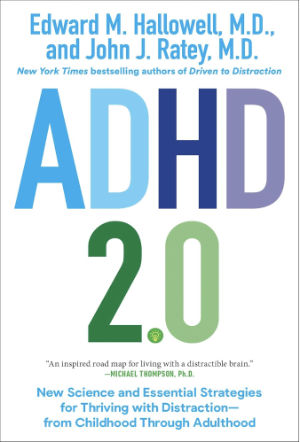
ADHD 2.0 is such a great next step. Hallowell and Ratey are two of the most well-known voices in the ADHD space, and ADHD 2.0 is their updated, science-backed overview that still feels accessible and hopeful. It’s a shorter read — around 200 pages — and it packs in a lot of insight without feeling heavy or clinical.
What I especially love is how they explain the why behind so many ADHD tendencies:
- The role the default mode network plays in keeping us stuck in negative self talk
- Struggles with transitions, time, and emotional regulation.
- They use approachable metaphors to describe how the ADHD brain works — like the Ferrari brain with bicycle brakes — which — I find — helps so much when you’re trying to explain your experience to someone else, too.
This is a great book if you’re looking to understand the neurological underpinnings of ADHD in a way that feels empowering. It’s written with a lot of compassion, and it has that classic Hallowell optimism that makes you feel like, “Okay. This makes sense. I can work with this.”
One quick note: it’s not as strategy-focused as Rosier’s book. It gives you the why more than the how. So if you’re looking for practical step-by-step tools, you might want to pair it with something like Your Brain’s Not Broken.
3. A Radical Guide for Women with ADHD by Sari Solden & Michelle Frank
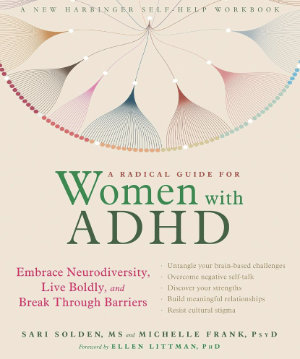
A Radical Guide for Women with ADHD is in a league of its own.
It’s less about tips and tricks, and more about unmasking — about healing the internalized beliefs we’ve carried around for years.
It’s written for women and folks who were socialized as girls and women, especially those of us who grew up hearing we were too sensitive, too scattered, too much, or not enough. And it names the emotional pain that comes with trying to keep up — while hiding the struggle the entire time.
If ADHD 2.0 explains what’s happening in your brain, A Radical Guide helps you reconnect with who you are underneath all the compensating.
It invites you to:
- Release the shame
- Embrace your full identity
- Stop molding yourself into what the world expects
This one is especially powerful if you’re earlier in your diagnosis or just starting to reflect on the cost of masking. It’s incredibly validating — and also really gentle. You don’t have to “fix” anything to read this book. You just get to be curious about your experience.
If you’re looking for a guide that centers your humanity and offers deep emotional support, this one’s a standout.
Emotional Support & Self-Compassion Books
So we’ve laid the foundation and spent a little time understanding what’s actually going on in our ADHD brains.
Now let’s talk about the next layer of support, which is emotional regulation, self-compassion, and releasing shame.
Once we know what’s going on intellectually, it doesn’t always change how we feel day to day. We might still carry the old stories — the “I should be better at this by now” thoughts, the guilt around unfinished tasks, the tension between what we want to do and what we’re managing to get done.
That’s why this next section is so important. These next four books help us reconnect with ourselves. They support the emotional side of this work — helping us better understand what we’re feeling, why it’s coming up, and how to respond to ourselves with care.
4. No Bad Parts by Dr. Richard Schwartz
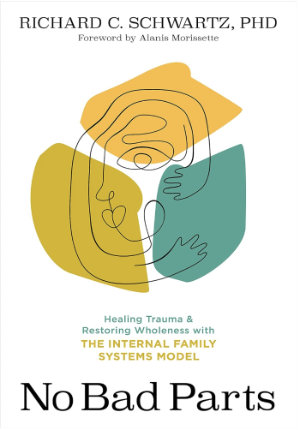
No Bad Parts is written by Dr. Richard Schwartz, the creator of a therapeutic approach called Internal Family Systems, or IFS.
This book reveals a type of exploration that can bring up a lot. So if you’re working with a therapist or have access to one, this is an especially effective framework to use if your provider is trained in that modality. It’s powerful work, and you don’t have to do it alone.
The core concept in Internal Family Systems is: We as individuals are similarly made up of different parts. And as the book title suggests, none of them are bad. Even the parts we don’t like — the procrastinator, the perfectionist, the avoider — they all developed to try and protect us in some way.
So, when we get curious instead of judgmental, we can start healing the relationship we have with those parts.
No Bad Parts is the book that introduces this framework
It’s a beautiful, thoughtful read — especially if you’re someone who’s working through shame, frustration with yourself, or emotional patterns that feel hard to change.
It provides an incredible understanding of how you can think about yourself and these different parts, and it also offers powerful exercises to connect with those parts.
If you have an ADHD brain like mine that tends to blow past exercises for meditations by telling yourself, “Oh yeah, I’ll do that later when I have a little more time…” I also want to recommend one other resource…
It is an audio training that introduced me to this work called Greater Than the Sum of Our Parts. As mentioned it’s an audio training — no book companion — and it came out before No Bad Parts.
Honestly, this was one of the most effective introductions I’ve had to any emotional regulation tool, because Dr. Schwartz walks you through the practice as you listen.
He’ll guide you into meditation and reflection, and instead of suggesting, “Pause here and come back when you’re ready,” he just brings you through it in real time.
That made all the difference for my ADHD brain.
I didn’t have to think about when I’d do the exercise or try to motivate myself to pause and reflect later — it just happened as part of the experience. It was immersive and grounding.
So, depending on your preferred learning style — whether you enjoy reading and highlighting or prefer a more guided, embodied approach — both of these resources are excellent. They share the same foundational concepts, just in different formats.
I highly encourage exploration of either of them, especially if you’ve been navigating shame, feeling stuck, or the inner critic comes out quite often. This is a gentle, powerful way to start building trust with yourself.
5. The Power of Vulnerability (audio series) by Brené Brown
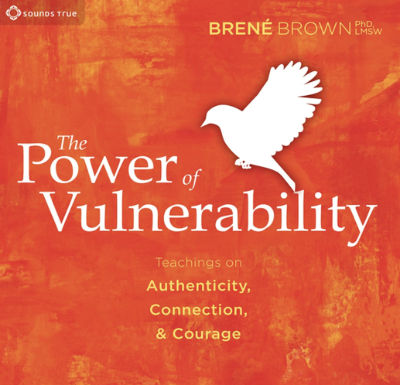
I want to offer one more pairing that had a similar impact on me early in my journey.
The audio series is called The Power of Vulnerability, and I remember the exact moment I first listened to it.
I was doing my post doc, working for the university, traveling to Florida to give a talk to alumni donors.
I had just landed, made it to the hotel, and was feeling totally out of my element. My friend, Megan, had sent me the link, saying, I think you might like this.” And let me tell you — she was not wrong.
I spent the entire Saturday listening to The Power of Vulnerability — and it was like someone had pulled back the curtain on a whole new way of thinking.
It was the first time I realized we could talk about this stuff. Shame, fear, connection, worthiness — all the things I’d been feeling and pushing through without really understanding why. It felt like something cracked open — in the best possible way. So again, that was the audio lectures, The Power of Vulnerability.
6. The Gifts of Imperfection, By Brené Brown

If you’re more of a book person, I like to think of The Gifts of Imperfection as the companion to the Power of Vulnerability audio series.
It expands on those core ideas and offers guideposts for wholehearted living — things like:
- Cultivating self-compassion
- Quieting perfectionism
- Letting go of what other people think
Even though Brené doesn’t write for ADHD brains specifically, I these books speak directly to the emotional experiences so many of us with ADHD carry — especially when it comes to vulnerability, self-worth, and showing up fully as ourselves.
7. Atlas of the Heart by Brené Brown

I know emotional vocabulary can feel a little foreign, especially if your original vocabulary was like mine — good, bad, fine.
For many of us with ADHD, emotional regulation can be a hurdle. And when we don’t have the words to describe what we’re feeling, it’s really hard to know how to respond to it.
That’s why Atlas of the Heart is such a helpful companion. This book is like an emotional dictionary — a reference guide to help you name and explore the full range of human emotions in a way that feels grounded and approachable.
That said, I don’t think you need to sit down and read this book cover-to-cover if you don’t want to. It’s a book you can drop in and out of when you’re trying to make sense of what you’re feeling, or looking to build more emotional awareness over time.
For example…
- Chapter 1 is titled: Places We Go When Things Are Uncertain Or Too Much: stress, overwhelm, anxiety, worry, avoidance, excitement, drag, fear, vulnerability.
- Chapter 4 is titled Places We Go When It’s Beyond Us: awe, wonder, confusion, curiosity, interest, surprise.
So, depending on how you’re feeling, you can drop into that particular chapter and read a little bit about it.
I also have to mention that the book is stunning — literally. The visuals, the design, the way the ideas are laid out — it’s beautiful and thoughtful and inviting.
Bonus, if you feel exploring or naming your emotions is a little intimidating or even frustrating, I recommend starting with Brené Brown’s HBO Max special, Atlas of the Heart – a five-part series that covers many of the same concepts and offers a warm, funny, and accessible way into this work. It’s a great first step before diving into the book itself.
Whether you start with the special or flip through a few chapters at a time, Atlas of the Heart is a powerful tool for increasing emotional literacy — which in turn helps us regulate, reflect, and relate to ourselves more clearly.
When we know what we’re feeling, we can actually respond to it, not just react. And that creates a little more space, a little more self-trust, and a whole lot more clarity.
8. The Perfectionist’s Guide to Losing Control by Katherine Morgan Schafler
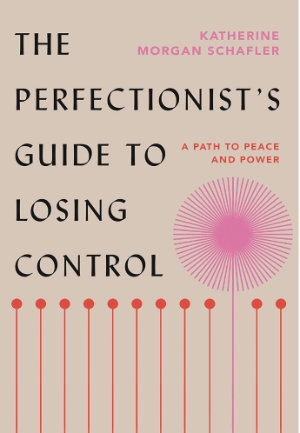
Now that we’ve built more awareness around what we’re feeling, let’s talk about how we relate to ourselves when those feelings come up, especially the pressure we put on ourselves to always do things “right.”
If you’ve ever had a hard time letting go of control, if you find yourself getting stuck in all-or-nothing thinking, or if the phrase “if you can’t do something right, don’t do it at all” feels a little too familiar… this one’s for you.
The Perfectionist’s Guide to Losing Control by Katherine Morgan Schafler is not ADHD-specific. It hits on so many themes that come up in my coaching work, especially for folks with ADHD who feel like they’re constantly trying to prove themselves or “earn” rest, success, or even basic self-trust.
What I love about this book is that it doesn’t treat perfectionism as an inherently terrible thing. The book covers many important topics that are so prevalent for ADHDers…
- Reframing perfectionism as something to understand and work with.
- Breaking down different types of perfectionism, helping you get curious about how it shows up in your life — not in a judgmental way, but in a compassionate, empowering way.
- The paradox of perfectionism: how it can make us incredibly driven and capable and deeply self-critical and exhausted. This book invites us to hold both — and then choose what parts we want to keep and what parts we want to soften.
Note on tone… Schafler is direct and bold in her delivery. That works great for some readers — it feels empowering and energizing. For others, it can feel a bit more intense or less “cozy.” So just know going in that this one has a strong voice, and if it resonates with you, it can be incredibly impactful.
This is a great read if you’ve been feeling like you’re never doing enough, or if front-end perfectionism keeps you stuck in the planning phase because you’re afraid of getting it wrong.
It’s a powerful reminder that we don’t have to let perfectionism run the show — and that letting go of control doesn’t mean lowering our standards. It means expanding our capacity to show up fully as we are.
Final Thoughts
This list of books helps us better understand our brains, navigate big emotions, and start shifting the way we relate to ourselves.
If you’re wondering where to begin, you might start by asking yourself: What kind of support am I craving most right now?
- Do I want to feel understood and validated in how my brain works?
- Am I looking for emotional grounding and self-compassion?
- Or do I want language and tools to start shifting patterns like perfectionism or self-doubt?
There’s no right place to start. Just notice where the pull is and let that be your guide
Next month, we’ll build on this foundation by diving into some of my favorite productivity and planning books — the ones I recommend once we’re grounded in how our brain works and how we want to support it.
- Have a friend who might benefit from the suggestions? Do a mini book club with one of the books. Let them know they’re on your mind, and send them the link to this episode.
- You could also snap a screenshot and share it on your Instagram stories as an invitation. Maybe several people would love to do some sort of book club with one of the books on this list. If you do that, be sure to tag me @imbusybeingawesome so I can give you a shout out.
Whatever you do, please know that I so appreciate you for helping me get these tools to even more videos and brains who need them. Thank you.
👉 Want to take these concepts further and apply them to your life? Learn more about how we can work together with my small group coaching program, “We’re Busy Being Awesome,” and one-on-one coaching.
✨ New to the I’m Busy Being Awesome podcast & not sure where to start? Grab my podcast roadmap, which highlights 10 core episodes that are a great place to begin supporting your ADHD brain.
Work With Me:
ADHD Books Mentioned In This Episode:
- Atlas of the Heart by Brené Brown
- The Perfectionist’s Guide to Losing Control by Katherine Morgan Schafler
- Your Brain’s Not Broken by Tamara Rosier
- ADHD 2.0 by Edward Hallowell & John Ratey
- A Radical Guide for Women with ADHD by Sari Solden & Michelle Frank
- No Bad Parts by Richard Schwartz
- Greater Than the Sum of Our Parts (audio series) by Richard Schwartz
- The Power of Vulnerability (audio series) by Brené Brown
- The Gifts of Imperfection by Brené Brown
More ADHD Resources:
- Discover my favorite ADHD resources
- Learn my Top 10 Tips to Work With Your ADHD Brain
- Access the I’m Busy Being Awesome Planning System
- Get the I’m Busy Being Awesome Podcast Roadmap
- Free course: ADHD Routine Revamp
Leave IBBA A Rating & Review!
If you enjoy the podcast, would you be a rockstar and leave a review? Doing so helps others find the show and spreads these tools to even more people.
- Go to Apple Podcasts
- Click on the I’m Busy Being Awesome podcast
- Scroll down to the bottom of the page, where you see the reviews.
- Simply tap five stars; that’s it!
- Bonus points if you’re willing to leave a few sentences sharing what you enjoy about the podcast or a key takeaway from the episode you just heard. Thanks, friend!


About Paula Engebretson
ADHD COACH | PODCASTER
I spent the first 31 years of my life thinking I just needed to “try harder” while dealing with crushing self-doubt, perfectionism, and imposter syndrome. Then I was diagnosed with ADHD.
Finally understanding the missing puzzle piece, I discovered how to work with my brain, build upon my strengths, and take back control of my life.
Now I help others with ADHD do the same. Learn more.