
As an adult with ADHD, navigating intense emotions often comes with the territory. Overwhelm, anxiety, frustration, shame…we know these feelings well. But most of us aren’t sure what to do when they pop up in the middle of a work meeting.
Trying to “manage” our ADHD emotions feels like an uphill battle…
… and “letting the emotion move through us” sounds totally weird and unclear.

So seriously…what are these big feelings, and what do we do about them?
In episode 246 of the I’m Busy Being Awesome podcast, we’re talking about just that.
We dive deep into the realm of emotions.
We identify the familiar experiences and patterns us ADHD brains navigate.
And with this deeper awareness, we put the proper supports in place.
If you’re ready to take charge of your emotional wellness and start feeling better, episode 246 has your name on it.
You can listen to the episode above or stream it on your favorite podcasting app here.
Prefer to read? No problem! Keep scrolling for a summary of the episode.
In This Episode, You Will Discover
- The common intense emotions ADHD brains face
- How to identify these experiences in your own life
- Practical strategies to support yourself when these big emotions arise
Episode #246: 5 Intense ADHD Emotions + Tips for Coping
Being an adult with ADHD often means navigating intense emotions on a regular basis. Overwhelm, anxiety, frustration, shame – these feelings can hit us hard, especially in public or around others.
While we may know these feelings well, understanding and working through them can be a challenge. The following offers a summary of the core concepts discussed in Episode 246 of the I’m Busy Being Awesome podcast. Read on to explore these intense emotions and discuss practical strategies to cope with them effectively.
Building Awareness: Recognizing Common Emotions
One of the first steps in managing intense emotions is building awareness around them. For individuals with ADHD, recognizing when and how these emotions arise can be crucial. Let’s start by identifying some of the most common emotions experienced:

1. Recognizing Overwhelm in ADHD
Overwhelm is a familiar experience for many of us with ADHD. It often manifests as a feeling of being swamped or unable to process more information. Whether it’s in a work meeting, a crowded event, or facing tight deadlines, overwhelm can leave us feeling drained and paralyzed. Recognizing the signs of overwhelm – such as racing thoughts or physical tension – is the first step in learning to regulate this intense emotion.
2. Identifying Anxiety Triggers
Anxiety is another emotion that frequently accompanies ADHD. The pressure to perform, uncertainty about outcomes, or anticipating feedback can trigger feelings of anxiousness. By becoming aware of the situations or triggers that provoke anxiety – whether it’s before a presentation, job interview, or social interaction – we learn to support ourselves through these feelings more effectively.
3. Unpacking Frustration Patterns
Frustration often arises when there’s a perceived obstacle preventing us from achieving our goals. Whether it’s technology glitches, communication breakdowns, or inefficiencies, frustration can quickly escalate for an ADHD brain. Understanding the root causes of frustration and recognizing when it occurs can help in developing strategies to address it constructively.
4. Understanding Shame and Embarrassment
Shame and embarrassment, though subtly different, both stem from social scrutiny and can be particularly challenging for individuals with ADHD. Whether it’s making a public mistake, receiving criticism, or experiencing social missteps, these emotions can feel overwhelming. By acknowledging the physical sensations and thought patterns associated with shame and embarrassment, individuals can begin to navigate these emotions with greater resilience.
5. Making Time for Self-Regulation
Once we’ve identified these intense emotions, it’s essential to have strategies in place to regulate them, especially in public or around others. While discreet techniques like stepping away for a moment or practicing deep breathing can be helpful, it’s also important to address the underlying triggers and patterns contributing to these emotions.
Recap:
Managing intense emotions with ADHD requires self-awareness, compassion, and practical strategies. By recognizing common emotions like overwhelm, anxiety, frustration, shame, and embarrassment, we can begin developing effective coping mechanisms.
To dive further into the world of emotional regulation, tune into the two-part episode, numbers #246 and 247 of the I’m Busy Being Awesome podcast, where we’ll explore specific strategies for supporting our ADHD brains as we navigate these intense emotions in public settings.
Links From The Podcast
- Learn more about We’re Busy Being Awesome here
- Learn about 1:1 coaching here
- Get the top 10 tips to work with your ADHD brain (free ebook!)
- Discover my favorite ADHD resources here
- Get the I’m Busy Being Awesome Planning System here
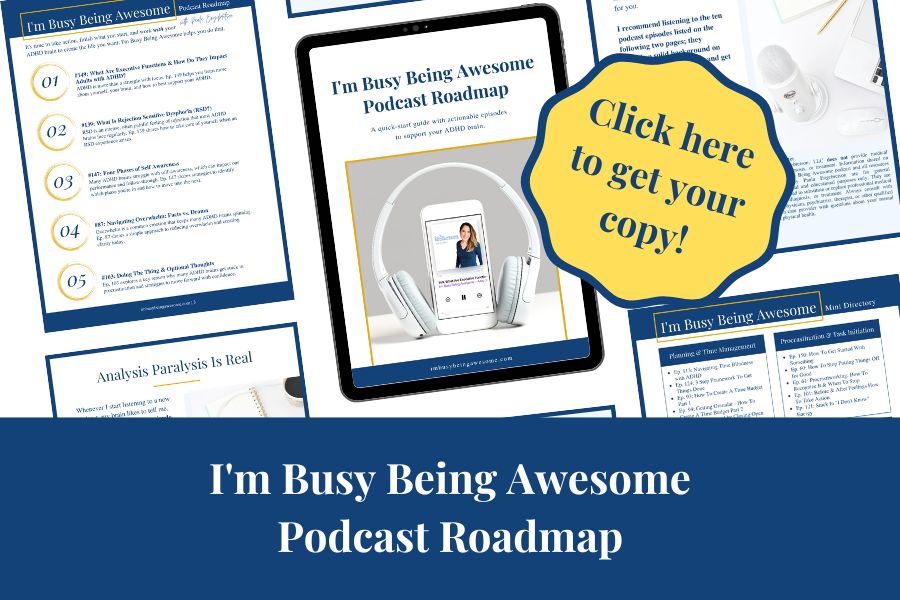
- Get the Podcast Roadmap here
- Get the ADHD Routine Revamp here
This post contains affiliate links, meaning I may earn a small commission if you make a purchase through my links, at no extra cost to you. Disclosure info here.
Leave IBBA A Rating & Review!
If you enjoy the podcast, would you be a rockstar and leave a review? Doing so helps others find the show and spreads these tools to even more people.
- Go to Apple Podcasts
- Click on the I’m Busy Being Awesome podcast
- Scroll down to the bottom of the page, where you see the reviews.
- Simply tap five stars; that’s it!
- Bonus points if you’re willing to leave a few sentences sharing what you enjoy about the podcast or a key takeaway from the episode you just heard. Thanks, friend!


About Paula Engebretson
ADHD COACH | PODCASTER
I spent the first 31 years of my life thinking I just needed to “try harder” while dealing with crushing self-doubt, perfectionism, and imposter syndrome. Then I was diagnosed with ADHD.
Finally understanding the missing puzzle piece, I discovered how to work with my brain, build upon my strengths, and take back control of my life.
Now I help others with ADHD do the same. Learn more.