Have you ever found yourself saying, “Fingers crossed,” or “I hope I can stick to it!” And despite the apparent optimism of the phrase, you felt a twinge of doubt or hesitation underneath?
You’re not alone. In fact, I’ve been thinking a lot about this seeming contradiction between an expression of hope (“Fingers crossed, I can follow this schedule!”) and a feeling more akin to uncertainty.

And in episode 256 of the I’m Busy Being Awesome podcast, we’re exploring just that.
Together, we’ll examine the subtle yet significant differences between hope and what I call “false optimism.”
We’ll delve into why these feelings arise and consider how acknowledging them can actually empower us to make things happen.
Tune in now and transform your “Fingers crossed…” into a confident, “I got this!” today.
You can listen to the episode above or stream it on your favorite podcasting app here.
Prefer to read? No problem! Keep scrolling for a summary of the key takeaways.
In Episode 256: Hope Vs. False Optimism You’ll Learn To:
- Recognize how hope vs false optimism shows up in our lives
- Understand why and how they feel different from one another
- Discover ways to use this awareness to fuel genuine optimism and make proactive change
–
This post contains affiliate links, meaning I may earn a small commission if you make a purchase through my links, at no extra cost to you. Disclosure info here.
Episode 256: How Hope Vs. False, Unrealistic Optimism Shows Up in Our ADHD Lives (Transcript)

Today, we’re talking about what I call “hope versus false optimism.”
It might sound like I’m anti-hope. I’m not. I think hope is a beautiful emotion that can be incredibly useful. However, I also think that many of us believe we’re tapping into hope when, in reality, we’re experiencing false optimism. And false optimism can feel pretty terrible when we slow down and really feel it.
Let me give you some context on what I’m talking about. Then we’ll dive into the difference between hope and false optimism, exploring when hope can be a beautiful, powerful emotion and when false optimism can leave us feeling hopeless, stuck, and desperate.
As we discuss hope versus false optimism, it might seem like I’m drawing a clear line between two distinct categories: one where hope is beneficial and another where we encounter false optimism. But that’s not quite my intention.
In reality, the landscape of hope is vast and filled with immense power. It can be experienced in countless transformative ways. So, as you listen, keep in mind that I’m not suggesting a binary choice between hope and false optimism.
Instead, think of it as exploring a spectrum where hope has its profound place and false optimism serves as a contrast to deepen our understanding of hope’s true potential.
I’m presenting this contrast to make the concept of false optimism clearer and to provide a framework for comparison. Please remember, hope is a tremendously powerful emotion that can fuel a wide range of positive actions and outcomes, far beyond the specific examples we’ll discuss today. So, while it might feel a bit abstract at first, stay with me.
Everything will come together as we move through the episode, and you’ll see how hope can be applied in more ways than one, helping us identify where false optimism might sneak in.
What is the Definition of Hope?

Whenever we explore topics like this, I love to begin with a definition of what hope is.
According to the Oxford Language Dictionary hope is: 1. a feeling of expectation and a desire for a certain thing to happen. 2. wanting something to happen or be the case.
So again, these are both wonderful definitions reflecting a powerful emotion. I am all in on this feeling of hope when we’re using it in situations where it feels supportive, empowering, and helps us foster a sense of expectation and desire for a specific outcome.
In fact, let’s dive into when it’s particularly useful to tap into this feeling of hope.
Engaging with hope and harnessing it as a powerful emotion
I believe hope is incredibly supportive and useful when we’re faced with circumstances beyond our control. Whether the issues are big or small, and regardless of our ability to influence them, hope remains a beautiful thing.
Examples
To give you a clearer picture, let me provide a few examples to put this into context.
- Perhaps I’m hoping for good weather—I hope it doesn’t rain during the ceremony.
- Or maybe, I hope my flight is on time so I can make my connection
- I hope this medical treatment works. I hope they recover soon.
- I hope they have the best time on their vacation.
Whether it’s a major event or a minor one, it doesn’t matter.
The Positive Aspects of Hope
When a situation is beyond our control and we are genuinely hoping for a desired outcome, that hope can feel beautiful.
Hope can be opening, optimistic, uplifting, and can help us maintain the mindset we desire.
For instance, I hope we have a sunny day for this event, or I hope that airport security is quick today.
When the situation is out of our control, I am all in. Let’s hope all day long, because that truly feels amazing.
The Concept of False Optimism
Now, here’s the deal. Before I considered there were differences between hope and what I now call “false optimism,” I tended to lump all optimistic expressions under the umbrella of hope.
I’d often say, “I hope” for all things.
However, I started to notice that using phrases like “I hope,” “fingers crossed,” or “knock on wood” didn’t always feel supportive or uplifting.
Sometimes, it felt quite the opposite—terrible, even. At times, it carried a twinge of hopelessness, appearing desperate or needy, especially when I said, “I hope so,” or “here’s hoping.”
This awareness prompted me to notice a distinct difference in how my body responded to these emotions.
Was it a pleasant experience for me? Upon closer examination, I realized that these negative feelings typically surfaced when I used hope in scenarios within my control.
For example, I might say:
- “Fingers crossed I can make this happen.”
- “I hope I can stick with this routine.”
- “Knock on wood that I’m on time this time.”
- “I hope I can get myself to do it.”
- “Here’s hoping I can get my act together.”
Do you ever find yourself using hope in this way?
Are you ever saying about yourself: “I hope I can do it,” or “Fingers crossed that I can make it happen.”
If this sounds familiar, take a moment to notice how it feels in your body compared to a different type of hope, like wishing for good weather at your niece’s birthday party. Observe the difference in your body’s response.
For those of you who feel a difference in your body when using phrases like “I hope,” “here’s hoping,” or “fingers crossed,” especially in situations where you control the outcome versus those you do not, here’s what I’ve noticed:
When I use these phrases they suggest that I don’t think I can do it.
What this really does is expose a layer of doubt that I’m not willing to confront.
Instead of addressing these doubts, I find myself wanting to sweep them under the rug, telling myself to hope for the best, cross my fingers, knock on wood, and any other “trick” to try and push through the doubt and make it happen.
This is why I call it “false optimism;” the genuine feeling of hope isn’t actually present.
Instead, we’re applying the label of hope to a set of underlying emotions filled with doubt, worry, insecurity, and uncertainty.
We’re dressing up our doubts with the attractive word “hope,” hoping it will mask our true feelings.
So, it’s no wonder that feels awful because we’re trying to overcome or ignore feelings of doubt, worry, insecurity, fear, and anxiety.
When we take a moment to slow down, pause, and reflect—realizing we keep saying “fingers crossed” or “here’s hoping,” or “I hope I can do this,” “I hope I can make it happen,” or “I hope I can finally stick with it”…
…we might notice we actually feel really anxious, or sense a feeling of desperation. These feelings are not super fun to sit with.
What’s going on here? Why do we keep using the phrases?
Typically, we turn to these quick phrases when we have bigger emotions lurking beneath and we’re ignoring them.
Instead, we prefer to cover them up with this veneer of false optimism.
When I use these phrases this way, it usually means I don’t truly believe I can accomplish the task, stick to the schedule, follow through on the plan, or reach the goal.
I also don’t want to admit that to myself because it would mean acknowledging a lack of self-belief.
Instead, I ignore these feelings and apply a layer of false optimism, telling myself “here’s hoping” or “hope I can do it.” It’s a bit like spraying perfume on garbage; no matter how much you spray, the underlying odor remains.
That analogy applies here as well—with all the doubts, worries, and insecurities we try to mask. They’re still there. We’re merely covering them up with hopeful phrases, crossing our fingers, and knocking on wood.
False Unrealistic Optimism Holds Us Back

What I’ve discovered, both for myself and many of my clients, is that this false optimism isn’t just unhelpful; it can actually hold us back. There’s so much we can learn from those uncomfortable feelings beneath the false optimism, beneath those crossed fingers.
So again, definitely check in with yourself.
Notice if this is the case for you. Maybe it’s not. And that’s very possible. But if this is true for you, and there are times when you’re using these hopeful phrases when maybe there’s some emotion underneath that deserves to be heard a little bit, then this next part is for you. Okay?
What Can We Do?
What do we do when we start noticing the times we use these phrases and they don’t feel very supportive?
Notice When these phrases come up most often for you
As I mentioned, for myself, I kept a running track in my mind of when I often told myself different iterations of “I hope so.” “Knock on wood” “Fingers crossed!”
I realized that I tend to use them most often when I’m trying to:
- Learn a new skill
- Stick to a habit
- Follow a routine
- Sick to my schedule etc.
And I doubt I can do it.
So, I invite you to start creating greater awareness around when these phrases show up for you.
Is it specific to certain areas of your life?
Perhaps it’s more prevalent at work, or in relationships, or maybe it happens more at home, like when you’re trying to stick to routines for decluttering and keeping things tidy.
Where do you notice it coming up most? That’s our starting point.
Check In With Yourself
From there, we’re going to slow down and really be present in those moments. I
Instead of rushing through and slapping some false optimism on top, we’re going to stay with the discomfort.
Check in with yourself:
- How are you feeling?
- Where do you notice it?
- Is your chest tight?
- Do your shoulders feel raised towards your ears?
- Is your gut clenched?
- Do you feel a sinking sensation? What’s happening?
- How does it feel in your body?
We’ll start by getting really curious about these sensations. Notice them.
Ask, “What are you trying to tell me?”
I am talking to the emotion here. “Hey, doubt. I notice you’re making my chest feel heavy and tight. What’s going on? What are we doubting? Why are we feeling uncertain? What’s causing this nervousness?”
Notice the tone of my voice. We’re not judging; we’re not interrogating ourselves with questions like,
“Why are you so uncertain? What’s your problem?”
Instead, we approach this with compassion, asking,
- Hey, why are we feeling some doubt here about this goal?
- Why are we uncertain about this schedule?
- What’s going on?
- Why do we feel compelled to just slap some false optimism on top?
- Let’s dig deeper. What’s really happening here?
This exploration is crucial because it helps us understand why the emotion is there—it’s here for a good reason.
So let’s take a moment to figure that out.
First, we:
- Create awareness of when we tend to resort to false optimism
- Focus on how it feels in our body and what those sensations are
- Check in with our emotions… We ask, “What are you here to teach me? How can I support you?”
Consider the Worst Case Scenario
Though it might sound counterintuitive, we’re going to allow ourselves to consider the worst-case scenario.
- What if our fears and doubts come true?
- What are we truly worried might happen?
- What if you don’t follow through on the plan or stick with the habit? Then what?
- What is the worst-case scenario?
We need to allow ourselves to actually confront these possibilities instead of continuing to ignore them or just slapping on some false positivity.
Here’s an example of what this could look like:
Let’s say I notice that every time I plan to start a new meal planning routine, I feel a lot of doubt. I might think, “Fingers crossed, I hope I follow through with the plan,” acknowledging the recurring doubt.
What am I avoiding looking at?
Then, it hits me. There’s this squishy, squeezy feeling in my gut—oh, that’s doubt. I don’t think I’m going to stick with it.
Why do I think that?
I pause and explore that emotion and realize that every time I’ve tried this before, I set really high standards that just aren’t feasible with the time I have. I expect myself to do all this intricate food planning and prepping, but I don’t have the capacity or the desire to do it. It’s like I’m setting myself up for failure by demanding too much without providing the necessary support to make it feasible.
I hear you, doubt. No wonder you’re here. This is the same elaborate meal plan I’ve tried to execute before, and I can already feel the doubt creeping in, but I didn’t want to face it. Instead, I found myself saying, “Fingers crossed. Let’s hope it works this time.”
I take a moment to assess how it feels.
I understand why the doubt is there, and I realize the major obstacle is that I’ve created unrealistically high expectations without any proper supports in place to make them achievable.
It’s good to know this.
Now, let’s imagine I don’t stick with it.
What am I really worried might happen?
I might realize that if I don’t follow through, I’ll end up wasting all that grocery money—again. We’ve seen this happen before, where all those vegetables end up slimy and in the trash because I didn’t follow through. I understand why I would be worried about repeating this scenario, probably berating myself for not following through yet again.
The worst-case scenario? I waste some money on vegetables and other ingredients I don’t end up using. And then I’d likely feel disappointed in myself for not sticking to the plan.
How can we support ourselves?
This is the final step. What can we do to make this plan more manageable?
For instance, if I continue with this meal plan I’m experimenting with, how can I simplify the steps?
- How can I lower those expectations so that I’m not aiming for a multi-course meal but rather something quick and easy?
- How can I meet myself where I am so that I can tap into a more authentic emotion, instead of just layering false optimism over my doubts and insecurities?
Can you see how much we can learn from this?
Do you recognize how empowering it is to slow down and connect with the discomfort lying beneath the ‘fingers crossed’ and ‘knocking on wood’?
It’s about learning from these feelings and then supporting ourselves to make the progress we desire by addressing those uncomfortable emotions.
I’m telling you, it’s incredibly powerful. Once we start doing this, we often find that we can adopt a range of new thoughts that feel just as natural but are far more supportive. Once we reach this place, we can begin experimenting with different mindsets that may feel strange at first—like trying on a new style of clothing.
You try it on, and though it feels a bit odd, you might find you actually like it.
Instead of sticking to the usual ‘here’s hoping’, ‘I hope I can do this’, or ‘fingers crossed’, we’re trying on new thoughts that also fit well but might look a bit different—and they look great, too!
Perhaps we try thinking,
“I want to do this. I intend to make this happen. I am becoming someone who can achieve XYZ. I’m working toward a goal that I truly want. I’m willing to put in the effort. I want this to happen. I’m choosing to give it a try.”
This is important to me. I’m going to keep trying until I make it happen.
I’m offering a variety of thoughts because each will resonate differently, and we all relate to thoughts in unique ways. I encourage you to try on different ones, just as if you were trying on various outfits in a fitting room, discovering which one feels like your new style.
We are finding new thoughts that fit and support us in the roles we want to play, the goals we want to achieve, and the habits and routines we wish to maintain.
So, allow yourself time to explore these different thoughts, allowing you to adopt a new mindset that enables you to stick with routines, follow through on habits, and continue working toward your goals as you figure out the next steps.
This is an important, though subtle, distinction because it places you firmly in the driver’s seat. When we’re constantly thinking, “I hope I can,” crossing our fingers, or knocking on wood, we feel out of control, as if we have no say.
When we shift our mindset to “I want this to happen, this is important to me, and I’m going to keep trying until I make it happen,” we reclaim that control.
For my fellow control freaks, this feels immensely better, right?
And even for those who aren’t control freaks but simply want to feel more empowered, being in the driver’s seat rather than merely hoping makes a significant difference.
However, this is also why I love the notion of hope in situations beyond our control. Let’s hope all day long in those instances—it’s truly beautiful.
Whether it’s the weather, flight times, or hoping your sister-in-law enjoys her vacation, applying hope with love in these uncontrollable circumstances feels right.
Join Our Group Coaching Program – We’re Busy Being Awesome!
Add your name to the waitlist!
A four-month small, supportive group coaching program for adults with ADHD and ADHD tendencies.
To learn more check out We’re Busy Being Awesome. Are you ready?
Final Thoughts
In essence, hope is a remarkably beautiful emotion that I encourage all of us to embrace as much as possible when it is genuinely supportive.
Yet, when it starts morphing into false optimism and we begin ignoring those underlying uncomfortable emotions, that’s the moment to pause. We need to check in and learn from the doubt, worry, fear, insecurity, and anxiety.
Engage with these emotions. See what you can learn from them so you can establish the necessary supports, put yourself back in the driver’s seat, and start feeling more empowered, capable, and ready to tackle whatever you desire.
Links From The Podcast
- Learn more about We’re Busy Being Awesome here
- Learn about 1:1 coaching here
- Get the top 10 tips to work with your ADHD brain (free ebook!)
- Discover my favorite ADHD resources here
- Get the I’m Busy Being Awesome Planning System here
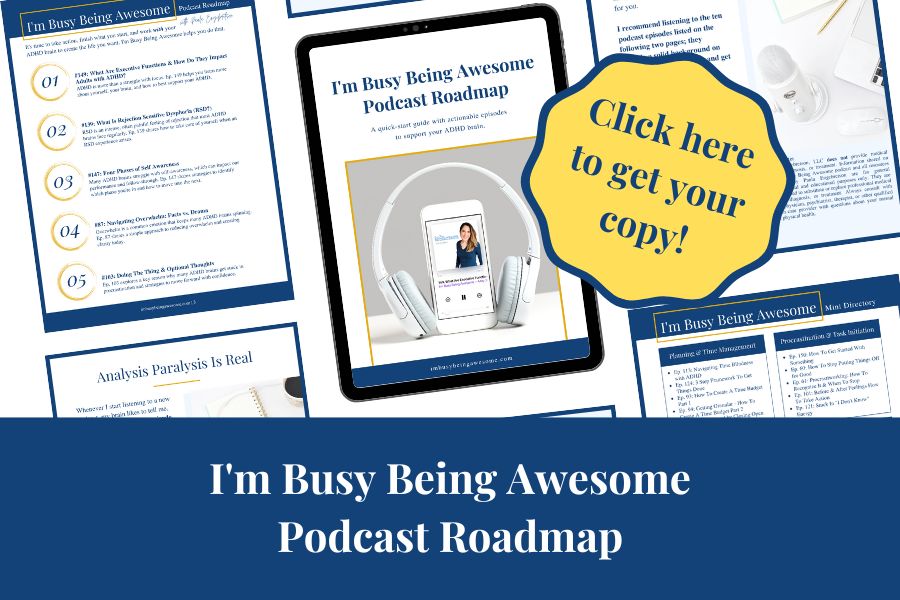
- Get the Podcast Roadmap here
- Get the ADHD Routine Revamp here
Leave IBBA A Rating & Review!
If you enjoy the podcast, would you be a rockstar and leave a review? Doing so helps others find the show and spreads these tools to even more people.
- Go to Apple Podcasts
- Click on the I’m Busy Being Awesome podcast
- Scroll down to the bottom of the page, where you see the reviews.
- Simply tap five stars; that’s it!
- Bonus points if you’re willing to leave a few sentences sharing what you enjoy about the podcast or a key takeaway from the episode you just heard. Thanks, friend!


About Paula Engebretson
ADHD COACH | PODCASTER
I spent the first 31 years of my life thinking I just needed to “try harder” while dealing with crushing self-doubt, perfectionism, and imposter syndrome. Then I was diagnosed with ADHD.
Finally understanding the missing puzzle piece, I discovered how to work with my brain, build upon my strengths, and take back control of my life.
Now I help others with ADHD do the same. Learn more.