
You know those moments when you look back and think to yourself, “Where the heck did the time go?” Well, that’s what you’re uncovering today – how to slow time down by taking action.

It may happen on a small scale…
- “What happened to the day?”
- “How has another week gone by?”
Or a bigger scale…
- “How can it possibly be June?”
- “Ummm, where did last year go?!“
My guess is your brain has these moments, too.
If you’re like me, when we have bigger scale moments wondering, “Wait, what year is it again?!” it can leave you feeling a little untethered.
But what can we do?
How can we help ourselves slow down and recognize the passage of time more clearly?
I explore that very question and so much more in episode 201 of the I’m Busy Being Awesome podcast.
Tune in now to learn:
- Three key reasons why time goes by so fast
- How to ground yourself when you feel untethered
- 7 actionable strategies to help you slow down time
You can listen to the episode above or stream it on your favorite podcasting app here.
Prefer to read? No problem! Keep scrolling for the entire podcast transcript.
In Episode #201, How To Slow Time Down, You Will Discover
- Three key reasons why time seems to slip through the cracks.
- How to ground yourself when you feel untethered
- Five actionable strategies to help you stay present and recognize the passage of time more often.
Leave IBBA A Rating & Review!
If you enjoy the podcast, would you be a rockstar and leave a review? Doing so helps others find the show and spreads these tools to even more people.
- Go to Apple Podcasts
- Click on the I’m Busy Being Awesome podcast
- Scroll down to the bottom of the page, where you see the reviews.
- Simply tap five stars; that’s it!
- Bonus points if you’re willing to leave a few sentences sharing what you enjoy about the podcast or a key takeaway from the episode you just heard. Thanks, friend!
Before we dive in…
I want to remind you about my free training that you do not want to miss. It’s scheduled for June 6th, 7th, and 8th – and we are taking a deep dive into the topic of overwhelm.
Because let’s be honest – ADHD overwhelm is very real and it can keep us very stuck.
In this three-day training, you’ll learn how to:
- Take care of yourself when your brain is past capacity and stuck in the spin cycle so that you can slow things down
- Create clarity around what’s most important, and start making that progress forward that you want to make.
- Learn some powerful tools and concepts AND you’ll have the chance to raise your hand and get coached by me live.
I’m telling you, it’s going to be so much fun. So if you ever navigate overwhelm – which, hello! if you have ADHD you absolutely will – you don’t want to miss it.
Join Our Group Coaching Program – We’re Busy Being Awesome!
Add your name to the waitlist!
A four-month small, supportive group coaching program for adults with ADHD and ADHD tendencies.
To learn more check out We’re Busy Being Awesome. Are you ready?
Episode #201: How to Slow Time Down: Strategies for Adults with ADHD (Transcript)
Hello, everybody. How’s it going? This episode is scheduled to come out on May 29, I believe, which means I’ll have already made the move to Minnesota from MA. I don’t think I’ll be settled into my new house yet, but I’ll officially be moved out of my my home in MA and in that lovely period of transition.
By the time I’m recording this, on May 1st, it’s crunch time around here. 10 days until I begin my drive and there are packing boxes galore around here. It’s amazing how quickly April seemed to pass. Time is a funny thing, isn’t it?
In fact, that’s exactly what we’re talking about in today’s episode – how we can better recognize the passage of time – especially over long stretches of time.
How can we slow time down so things don’t seem to fly by in a blink, leaving us wondering where all the time went? Because I know it’s not just me who navigates this.
I hear from my clients all the time and I’m guessing you’ve said it, too. Where did the time go? How is it possible that another week, month, or year has gone by?
Of course, time blindness can play a role in this experience. However, I’m more interested in exploring three additional reasons we often struggle to recognize the larger passage of time over weeks, months, and years.
Once we better understand those reasons, we’ll then talk about some ways to help us slow down and better mark that passage of time. This way it doesn’t seem to slip by in a blink. Because if you’re anything like me, you’d be just fine if time slowed down a little bit and didn’t seem to disappear so quickly.
why does time go by so fast?

Let’s start with some of the reasons why it seems like time is speeding up and the months seem to melt away at the blink of an eye. Why is this?
1. We’re Getting Older
I think one of the reasons this happens is simply because we’re getting older.
As we age, we have more and more experiences and memories to compare the present moment to. As opposed to when we were younger, and each new experience was a new memory. We have less new and novel memories to help us slow down and mark the passage of time.
For example, when you were eight years old, a year was a significant amount of time. It was 1/8th of your life!
You had a lot of new experiences in that year, and these new experiences required a lot more attention and processing from our brain. Our brain had to work hard to take in all of the information and make sense of it. Not surprisingly, this demanded a lot of the brain. This ultimately made us much more aware of each moment and experience.
However, when we have 30, 50, 80 years under our belt, that one year doesn’t seem as significant. It’s a much smaller fraction of our life and often doesn’t seem as different from the previous year. Plus, we’ve become more familiar with the world around us. We generally know what to expect and how things work.
In turn, we often don’t pay as much attention to new experiences, and so time seems to pass more quickly.
Each memory and experience is generally more novel and exciting when we’re younger because everything is new. As we get older, our brain doesn’t have to work as hard at the regular ins and outs of our day-to-day life.
2. We focus So Much On The Future
As we get older, we can find ourselves focused on the future and living for the next thing more often.
For those of us in the I’m Busy Being Awesome community, we have goals and aspirations that we want to achieve. Now, this isn’t a problem. In fact, I think working toward goals and challenging ourselves to grow is one of the things that make our lives so rich.
However, when we only focus on the future and constantly think about what’s happening next, wishing we were “there” already, we’re not as aware of the present moment, and so time seems to slip by more quickly.
As a side note, this is why I often talk about enjoying the journey along the way. Whenever I coach my clients on goals and goal setting, I try to stress that whether they reach their goals or not is completely secondary. It’s the cherry on top. What really matters is all the learning you gain and the growth you experience as you work toward that end goal.
3. we’re not so good at keeping track of things
Especially for the ADHD brain – we’re not so good at keeping track of things that aren’t happening in the now. In other words, when we look back at a week or month, it can be hard to remember everything that happened. Why? Because our brains are not very good at storing these memories.
Why is this?
- We are constantly bombarded with information from all angles, which has us especially distracted and unfocused
- Many of us are so focused on our future “when I get there” thoughts that we miss the now
- Most of us with ADHD brains have terrible short-term working memory
And that’s exactly where our day-to-day experiences are stored: our short-term memory.
If we don’t actively and intentionally rehearse that information or the experience – whether that’s talking about it, writing about it, reflecting on it, etc. OR we don’t have a major emotional reaction or experience to it – it quickly fades.
This is why we might remember big days like birthdays or holidays or major accomplishments – because we have more emotion and ceremony attached to them. But the day-to-day things fade more easily.
So again, if you find yourself thinking that time is speeding up and you have no idea where the weeks, months, and maybe even years go, you’re definitely not alone. And there are good reasons for it.
Let’s recap
1) As we age, our experiences seem less novel since we don’t challenge our brain with each one. In turn, they don’t “stick” as strongly.
2) Many of us get stuck living in the future, missing the here and now, because we’re convinced that once we get “there” that’s when things will be better.
3) We’re constantly bombarded with new information and struggle with short-term working memory, so the likelihood of memories sticking around to make it into our long-term memory bank is less – especially if we’re not intentional about it.


What Can We Do? How Do We Slow Time Down?
Is it possible to slow time down? Absolutely. Below are 7 strategies you can try to help you slow time down in your life.

1. Be Aware Of What’s Happening
First – we want to do exactly what we’re doing now. Raise awareness of what’s going on, make sense of the experience, and not judge what’s happening. It makes sense. Nothing’s gone wrong.
If we want to slow things down a bit – or rather, help us remember our experiences a bit more, we’re not going to actually slow down time – there are different ways we can approach our days to help.
If we struggle to remember experiences and instead just feel like time slips by and everything’s a blur, there are ways we can help.
Before we talk about that, I first want to acknowledge that beginning this process of increasing our awareness, slowing down our experience of passing time, and increasing our memory recall to help us mark our days and weeks can feel challenging.
As I just mentioned, we struggle with our short-term working memory, so it is literally harder for our brains. So when we begin this process of trying to remember what we did and where our time went, we may find that we feel frustrated or overwhelmed, or untethered.
We may realize we’ve been living in busy mode or on autopilot, and when we start slowing down it may feel like a shock.
We might be wondering – what the heck have I done with my time over the last few months, few years, few decades?! Seriously, when we are in the throes of life, time can slip by. That’s okay.
If you have this experience, take some breaths and remind yourself that you’re okay. iIt is possible to trace how you spent your time if you want to.
More importantly, it’s possible to learn how to increase your intentionality and awareness of that passing time going forward.
Examples
I think COVID provides a powerful example of this situation. Of course, everyone’s experiences were different depending on where you lived and the laws in your area, your own practices, and whether or not you were on the front lines.
But for many of us, there were weeks, months, and years where time did such a weird thing. It dragged on forever, and it went by in a blink. And it seemed to do this simultaneously.
What the heck? How is this even possible?
You may experience something similar when you’re raising young children, or you’re in an incredibly demanding season at work, or you’re navigating an intense health situation yourself or caring for someone you love. These are all situations where we might look back feeling a little untethered, thinking, what in the world happened?
2. Create A Timeline
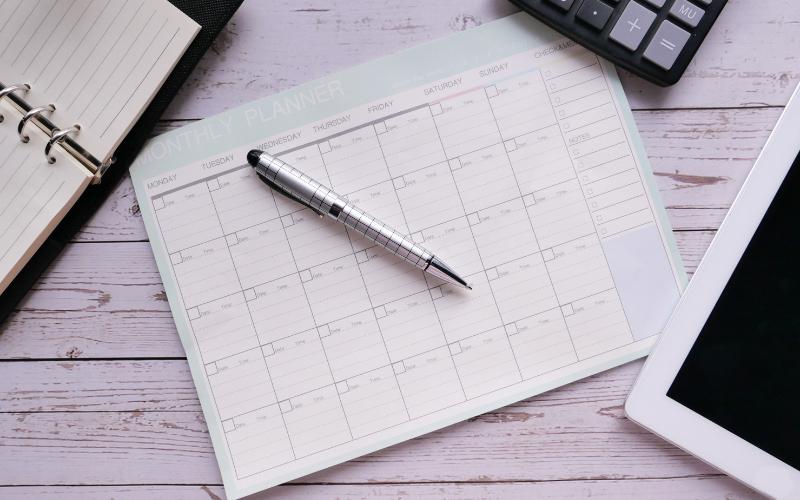
If this is the case, I think a powerful place to start is creating a timeline of sorts.
As I started outlining my ideas for this section on creating a timeline, I realized I have a lot to say on this topic. In fact, I think it deserves a podcast episode of its own. So I’ll plan to deep dive much further into this idea of creating your own life timeline in a coming episode. But for now, I want to give just a quick overview.
I think creating a timeline – especially when we’re feeling a bit lost – is a powerful tool to help ground us in where we are now and where we’ve been.
A timeline can literally help us visualize the passage of time. And depending on what’s front and center for you right now, you can create that timeline for the past week, month, year, or multiple years. It’s really up to you.
Additionally, you can use the timeline to help you track whatever you want to remember.
Maybe you identify developments in your career path or your progress on a goal.
Perhaps you use it to mark major life events or create a timeline of your hobbies and interests.
Seriously, the things you can track are limitless. And the impact can be quite significant. Because first and foremost, and answer the question, “where the heck did the time go?!”
A Timeline can also help you:
- See patterns and trends
- Remember important events
- Recognize and appreciate where you are now
If you begin thinking about the passage of time and start feeling a little wobbly. If you’re wondering, “how in the world did so much time pass?” and you’re not sure where it went, I first want to remind you that you’re not alone.
In fact, I’ve been feeling this a lot myself as I pack up my house and get ready to move back to Minnesota. I’ve been living out in MA since August of 2007 – which at the time of this recording is almost 16 years ago – and I’m a little stunned at that number. That’s a long time!
If that feels too big or you have no idea where to start – no worries. Make sure you’re subscribed to the podcast. That way, you’ll have all the additional strategies and ideas on how to create a life timeline in an upcoming episode.


I also want to pause with an important sidebar here.
It’s important to note that separate from all of this information I’ve just mentioned, if you notice you struggle to mark the passage of time because you can’t remember past events and you’ve also experienced trauma, the challenge with memory may be related to the trauma because our bodies can go into a protective mode by forgetting experiences from our past.
Now, this is not what we’re talking about here – but I want to mention it because we’re talking about memory and because this community is filled with busy awesome brains who have ADHD or ADHD tendencies.
Research suggests that there’s a high correlation between people with ADHD and those who experienced trauma since many ADHDers were often bullied as kids, feel like they don’t fit in, struggled in school both academically and socially, and often received criticism by adults for their behaviors they couldn’t control.
If you suspect that trauma may be impacting your ability to remember your past experiences, I highly recommend connecting with a trauma-informed therapist. There is so much powerful work you can do in therapy, and while it can feel uncomfortable or even scary if you’re new to this work, it’s also transformational and so healing when you find a therapist you really sync with and who can help you feel safe and seen.
Also, if you suspect this is the case, you’re still more than welcome to use the strategies we talk about today because we’re focused on the ADHD piece and supporting our short-term working memory in our day-to-day right now. We’re not trying to recall moments from long ago in the past.
Even so, take care of yourself and go slowly and gently. If you notice yourself feeling frustrated if you’re having a hard time remembering things in the past, take a step back. It’s no problem. Your brain is trying to keep you safe, and by working with a therapist, they can help you find some additional ways to create that safety for yourself.
So again, that’s not our focus today, but I wanted to mention it because it’s very real for many people in our community. Take care of yourself.
3. Create New Memories
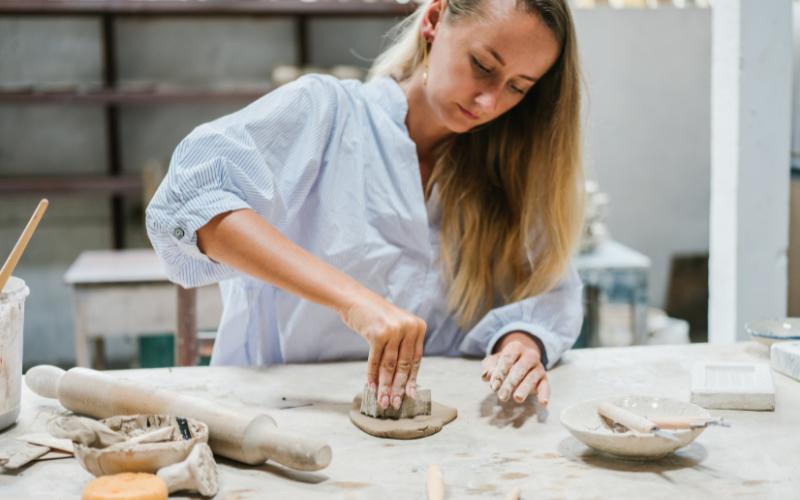
What I’ve found to be true is that creating meaningful experiences is one of the most powerful ways to slow down and recognize the passage of time.
As I mentioned in passing at the beginning of the episode, when we’re young, everything is new. Those experiences are more significant when it’s one of the very first times we’ve done the thing.
As adults, however, it’s easy to fall into the routine of our everyday lives, it’s easy to get stuck in busy – bouncing from one thing to the next – and time can seem to slip away without us even realizing it.
Shift Away From Repetition with New Experiences
By intentionally creating experiences that challenge and excite us, we can shift away from this repetition by intentionally doing something new and creating memories as we do it.
When we engage in new and novel experiences, our brains are forced to work harder, and time seems to slow down.
This is because our brains are constantly processing new information, and as a result, we are more aware of our surroundings and the passage of time.
Whether it’s learning a new skill or traveling to a new place, these experiences provide us with a fresh perspective and help us to see the world in a new light.
When we engage in meaningful experiences, we are more likely to savor these moments and appreciate the time that we have.
These experiences provide us with a sense of purpose and fulfillment, and they remind us of what truly matters in life. Especially if we don’t pack the experience with non-stop activities that quickly feel like a to-do list to get through as well. But when we intentionally step out of our routines or comfort zones and try something new, it can really help us slow down our experience of time and be in the moment.
You may be thinking, sure, that sounds great, but how? What does that actually look like?
Of course, there are limitless ideas, but here are a few for you to play around with.
How to Create New Memories
Make time to spend with the people you love
This could look like going on a vacation with your family or a girls weekend with your best friend. But it could also look like having a picnic in your backyard or hosting a themed movie night with your friends. And you watch one of the Harry Potter movies and you make Harry Potter themed snacks and everyone dresses up as their favorite character.
Seriously, you can use your amazingly creative brain and make it your own. But spending time with those you love in new or novel ways can absolutely help make memories and slow down your experience of time.
Trying new things
Maybe you sign up for one new class at your local community center each season that allows you to explore a new interest or hone a new craft. Maybe you take a cooking class, or you take a leaf out of the book Julia and Julia, and you try cooking through a new cookbook.
I have a feeling that you’d probably start linking favorite foods with this particular time in your life whenever you make those recipes again. And just like I mentioned above, doing these new things with people you love – or perhaps meeting new people and creating new friendships – can help make those memories even stronger.
Find an organization where you volunteer regularly
Maybe it’s a soup kitchen, an animal shelter, or a nursing home. I could be your local library or the nature center or school district. Anything that pulls you out of your regular routine can really help you create memories and mark the passage of time – and when you’re volunteering while doing so, it’s a double win.
4. Create Plans & Identify Goals
Another way to slow down time is by creating a plan for an upcoming event or setting goals with benchmarks.
When we make plans or set goals and track our progress, we give ourselves a sense of purpose and direction. It can be easy to feel like time is passing us by if we’re just going through the motions without a clear idea of what we’re working towards.
But by setting goals and tracking our progress, we can break down that bigger goal – the bigger thing we want – into smaller, more manageable steps and then celebrate them along the way.
Many of us often live for the future, thinking things will be better when we get there.
“I’ll make time for fun when we get to the vacation.”
“I’ll relax once the move happens.”
“I’ll finally feel proud of myself once I get the job or declutter the entire house or sign my first 10 clients.”
We do this all the time, right? The challenge here is that when we live in this mindset, we stay focused only on the future. And we trick ourselves into believing it’s the job or the level of clutter or the number of clients that make us feel better. Plus we miss our entire experience of getting to that end goal.
However, that’s not how it works.
It’s not the circumstance that makes us feel a certain way, it’s what we’re choosing to think about that circumstance that’s impacting our experience and how we feel.
By intentionally slowing down to create a plan, and enjoying the process of actually getting ready for that trip or preparing for the move. By using the benchmarks you identified to celebrate your progress on the way to a decluttered space or 10 clients – that’s what’s going to make your experience so much more powerful.
That’s going to allow you to slow down and notice the passage of time more easily.
5. Take Pictures or Videos

On the surface, taking picture or videos or even writing down or recording voice memos help you remember the people you love, the important moments you experience, and the goofy things your kids or your pets do.
Again, it literally captures those moments in time, so when you look back, you can remember more easily what you were doing and who you were doing it with.
In addition, it can help you track your progress.
Let’s say you’re learning pottery or how to paint. Taking pictures or videos or audio captures where you were and how you’ve honed your skills or how your styles have developed over time.
I even noticed this when I went back into the podcast archives for last week’s episode with the listener favorites. It was fun – and a little cringy – to see how things have progressed over the past almost four years.
If you’re taking photos and videos of your hobbies and interests, you’ll be able to see how you’ve improved over time. This can help and make the passage of time seem more meaningful.
6. Stay Present As Often As Possible
Focus on staying present as often as possible.
As I just mentioned, it’s very natural as we get older to feel the weight of time on us. And we start worrying so much more often about what the future holds, or we reminisce or ruminate – depending on the experience – about the past. In both situations, we often forget to stay in the present moment, which is such a powerful way to appreciate the passage of time.
Become Aware Of The Little Things
When we focus on the present moment, we become much more aware of the little things.
The warmth of the sunshine on your walk
The sound of birds chirping outside your window early Sunday morning
The sound of your best friend’s laugh when you’re both laughing so hard you can hardly breathe
These are the moments that we often overlook in our rush to get to the next thing.
By being present, we slow down and allow time to unfold naturally.
We stop trying to control every moment and instead, let life happen.
It’s in these moments of letting go – which I’ll be the first to admit as a total control freak is SO HARD TO DO. But it’s in those moments when we really recognize the passage of time and see the beauty in those fleeting moments.
And as a bonus, I’ve also found that when we’re more present in the moment, it helps us release some of our worries about the future or spinning in the past.
There are so many tools out there to help us slow down and pause – to help us ground ourselves in where we are and what we’re feeling right now so we can be really intentional about how we’re showing up and being present for it.
7. Make Time For Reflection

If we’ve created opportunities for new experiences, we’ve created plans or set goals, and we’ve taken pictures and practiced mindfulness, the last thing that plays such a key role in helping us slow down and recognize the passage of time is reflecting on these experiences. (Side note – you don’t have to do all of these. Nor does it have to be in this order, but I do think that making time for reflection is absolutely key.)
When we take the time to reflect on our memories, we give ourselves the opportunity to re-experience those moments and savor them again.
This process allows us to hold onto those memories and create a stronger connection to them – especially if we reflect on the pictures we took or reminisce on the vacation that we took with our partner.
Remembering those experiences and feeling those emotions again can help reinforce them in our minds. Plus, I think it’s amazing how much we can learn about ourselves by reflecting on our experiences – we can gain insights into what brings us joy, what challenges us, and what we want to achieve in the future.
By reflecting on our experiences we help ourselves slow down and appreciate the passage of time. When we think about what we’ve done and how we felt during the experience, we can savor the moments and create more lasting memories.
Make time for reflection by:
Writing in a journal. I find this is a really effective approach for me. By putting our thoughts and feelings down on paper, we can capture the nuances of our experiences and can revisit them in the future. Of course, you can approach journaling in any way that works for you.
You might write about:
- Your experiences
- About the people you encountered or spent time with
- How you felt in the moment
Even just taking a few minutes at the end of each day to think about what you did and how you felt doing it can be a powerful tool for slowing down and experiencing the passage of time.
Talking to a friend can also be a great way to reflect on our experiences. Sharing our thoughts and feelings with someone we trust can help us gain new perspectives and insights, and deepen our connection with others.
Scrapbooking the pictures you took or creating photo albums on whatever app is out there right now. Maybe you reflect on the experience through art, and you paint about the memory.
Again, there are so many ways to make space for reflection and there is no wrong way to do it. Instead, the key is to intentionally make time for it. Make time to reflect on your experiences and appreciate them for what they are.
By doing so, we can slow down, live more fully in the present moment, and create more meaningful, lasting memories.
Next Steps:
Join us in We’re Busy Being Awesome. The June cohort begins in just a few weeks. if you’re looking for ways to slow time down, but also ensure that you’re using your time intentionally in the way that you want to, and you’re seeing the progress you want on both your personal and professional goals while working WITH your ADHD brain, I’d love to have you join us.
We take all the different concepts that I talk about here on the podcast, and we dive deep with coaching and application. And because it’s such a small group, you have that close attention and support directly from me each week. So you’re creating your own toolkit designed for YOUR brain and the accountability to help ensure you’re sticking with it as you find what works best for you. I’m not going to lie, it’s pretty awesome!
Join Our Group Coaching Program – We’re Busy Being Awesome!
Add your name to the waitlist!
A four-month small, supportive group coaching program for adults with ADHD and ADHD tendencies.
To learn more check out We’re Busy Being Awesome. Are you ready?
If you want a taste of what being in the group is like, sign up for the free training: June 6-8. You’ll learn tools AND have the opportunity to raise your hand for coaching directly from me.
How To Slow Time Down: Recap
First, if it seems like time is flying by and you have no idea where it went, you’re not alone. There are many good reasons for it.
Today we talked about three key reasons, including:
1) As we age, our experiences seem less novel since we don’t challenge our brain with each one. In turn, they don’t “stick” as strongly.
2) Many of us get stuck living in the future, missing the here and now. We’re convinced that once we get “there” that’s when things will be better.
3) We’re constantly bombarded with new information and struggle with short-term working memory. The likelihood of memories sticking around to make it into our long-term memory bank is less – especially if we’re not intentional about it.
We also explored 7 ways to be more intentional and help us recognize the passage of time, and these include:
- Be aware of what’s happening
- Create a timeline
- Making more memories through new experiences
- Creating a plan with clear action steps or setting a goal with benchmarks
- Taking pictures or videos to capture the moment
- Practicing mindfulness to stay present
- Making space for reflection
I would LOVE to hear what strategies work best for you!
If you have additional ways you like to mark the passage of time. Join me over on Instagram. Share your tips, experience or ask any questions on the post for this episode. Or drop it in my DMs – I absolutely love hearing from you.
Links From The Podcast
- Join Overwhelmed to Action Free Training here – June 6-8
- Learn more about We’re Busy Being Awesome here
- Learn about 1:1 coaching here
- Get the top 10 tips to work with your ADHD brain (free ebook!)
- Discover my favorite ADHD resources here
- Get the I’m Busy Being Awesome Planning System here
- Get the Podcast Roadmap here
- ADHD symptoms in healthy adults are associated with stressful life events and negative memory bias
- Mindfulness Meditation Training for Attention-Deficit/Hyperactivity Disorder in Adulthood
- Tune into Episode 113: What is Time Blindness here