
We often hear about the power of having a morning routine, and if you’re like me, you’ve tried many times to create one because you want those benefits. You want to feel calm and grounded. You want to start your day off right.
And also, there’s a curious thing that many of us ADHD brains do when it comes to morning routines. After deciding to create a routine intended to help us feel grounded, we proceed to shove roughly 4,000 things into that short window of time, thinking that if we do them all perfectly, that’s what will create our peaceful morning.
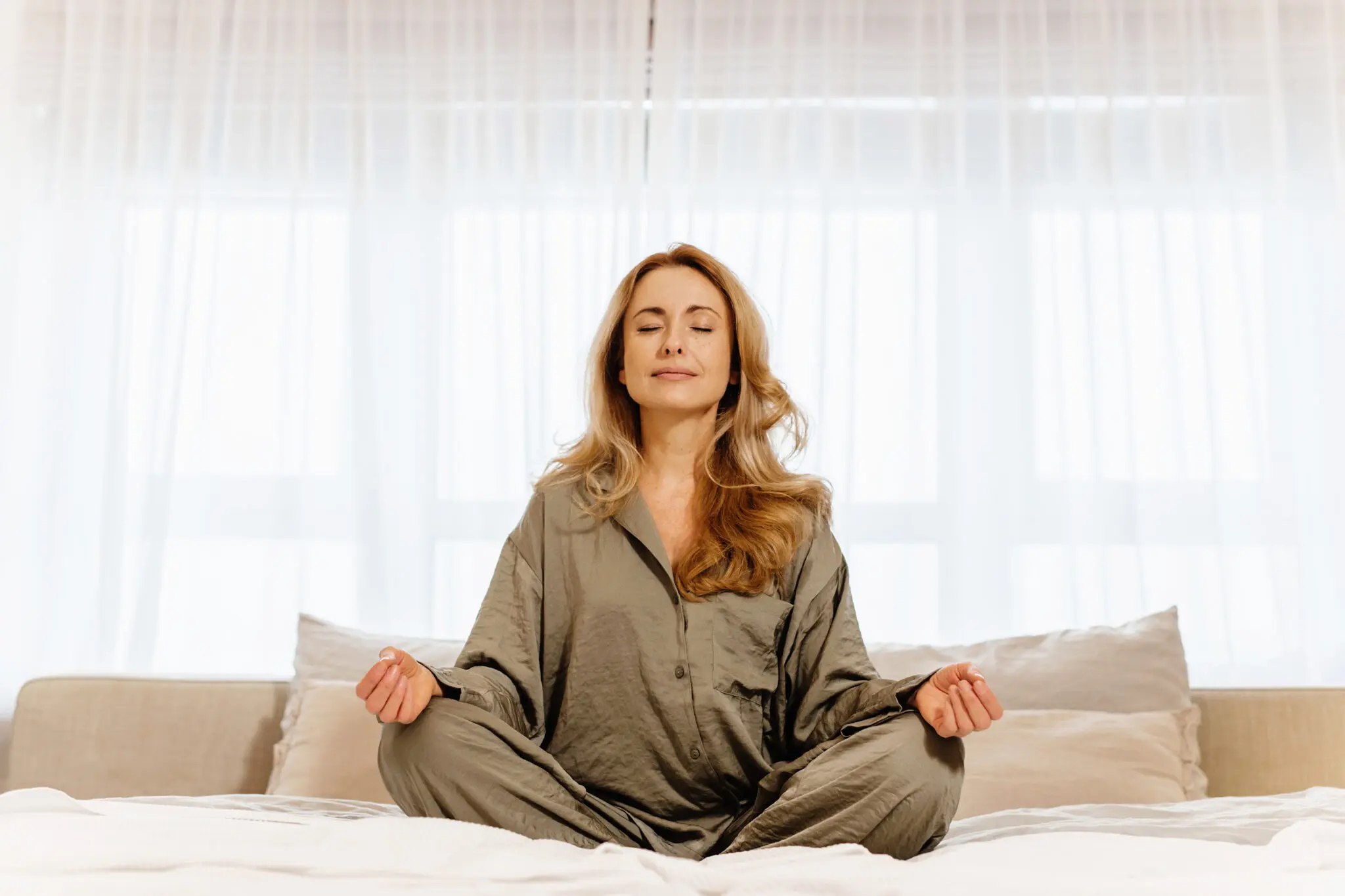
This kind of ADHD overscheduling shows up in so many places, whether it’s a morning routine, a weekend to recharge, or a day reserved for deep, focused work.
We initially set aside the time and then somehow manage to pack it so full of tasks and activities that we defeat the purpose of that intentional space in the first place. Let’s talk about why that is and what we can do about it.
https://www.youtube.com/watch?v=08uFFxNhuCk
Listen to the episode above or stream it on your favorite podcasting app. Prefer to read? No problem! Keep scrolling for a summary of key takeaways.
In Episode 382 we’re exploring:
- Where the pattern of overscheduling open space happens mosts often
- Why our ADHD brains want to pack every hour
- How the think, feel, act cycle keeps us squeezing in “just one more thing,” and some thoughts to try on instead
- Six steps to make space for yourself and keep it
Choice Containers: How to Protect the Space You Create
A few weeks ago, in episode 380, we explored a concept that I called choice containers and the power of making decisions ahead of time. One of the examples we talked about was navigating our mornings, and how we so often try to squeeze in just one more thing. The decision ahead was to choose just a few non-negotiables for your morning rather than trying to cram a whole bunch of extra stuff in just because you can, and then intentionally enjoy that extra spaciousness on the other side.
This idea of choosing spaciousness, of creating space for ourselves, has been coming up a lot. It’s been coming up for my clients, it’s certainly been coming up in my own life, and I’ve been hearing about it generally from a lot of different people.
Where ADHD Overscheduling Shows Up: Mornings, Weekends, and Workdays
Let’s talk about the areas where I see this come up most often. These are just examples I’ve seen or experienced myself, and there may be more.
ADHD Overscheduling in the Morning Routine
The most classic area where I see this show up is the morning routine. We tend to obsess about creating this ideal morning routine. So many of us are determined to establish one because that’s what we’ve been told is good to do. We’re told we need to set ourselves up for success for the day ahead or whatever.
And don’t get me wrong, I do love a good morning routine for that very reason. There’s a reason they’re helpful, and I think they can get blown out of proportion. The way we approach creating our morning routine, if we’re not careful about it, can be a little bit backward.
Because if you think about it, what is the point of the morning routine? In fact, that’s a really important question to ask yourself anytime you’re establishing a routine: What is the point of this for me?
I think it’s a safe bet to say many of us want a morning routine so that we can start the day feeling good, feeling calm, grounded, intentional. And even though that’s the goal, we tend to fill up this little amount of time we have, maybe 30 minutes or an hour if we’re carving out all the time in the world, with everything. We decide that we need to somehow meditate and journal and work out and read and drink lemon water and make a smoothie with a healthy breakfast and maybe start the laundry while we’re at it. And all of this happens, of course, before the kids are up or before the workday starts.
So we end up rushing through this routine that was supposed to help us feel grounded and calm, because we’re constantly shoving more in. I don’t know about you, but I can’t feel calm and grounded when I’m constantly racing the clock.
And that’s the irony. What actually helps is slowing down and doing less. So often the answer is to take things out, to stop rushing, to give ourselves time. We create this container to give ourselves space, so let’s not fill up that space with a bunch of things. What would it look like to hold that space for the calm?
ADHD Overscheduling on the Weekend
I often see this show up with weekends, too, and wanting to have a restorative weekend. Let’s say you’ve had a full week. You look ahead to the weekend, and you’re like, “There’s nothing.” It’s one of those rare weekends. We don’t have plans. We just get to relax.
And then we fill up the weekend.
This is something I know all too well. I’ll look at the weekend ahead and think, “This is the weekend to recharge,” and then I think of all the fun things I wanna do, the things around the house that would be good to get done, the people I wanna see, the projects I want to make. And suddenly I’ve created another workday, just with a different type of work. It is not that restorative weekend I wanted.
As an example, I was looking at my weekend list. I like to do a thought download of all the things I might want to do over the weekend, and there are 19 things on it. They include:
- Power washing the deck
- Mapping out the rest of Q4 on the big wall calendar I have over here
- Creating the podcast topic prep, figuring out what I wanted to talk about
- Cleaning out the back room
- Finishing a puzzle
- Food prepping for brunch
- Doing a grocery order and a pickup
- Doing homework for a class I’m taking
- Decluttering the closet
- Scheduling a haircut for Finney
- Painting
- Crocheting while chatting with my friend Jen
- Reading a book for book club
- Cleaning the bathroom
- Giving Finney a bath
- Going to brunch at my parents’ house
- Meal prepping for the week
- Weeding the yard
- Decorating for fall
Yep, turns out that’s too many things for two days when you want to just recharge.
The sneaky part is that a lot of these are great things. They’re things I want to do. They’re fun, they’re helpful. I wanna see the people. And also, when we try to pack all of them into two days, it no longer recharges me. (For more on this one, here’s how to make weekends feel easier for ADHD brains.)
ADHD Overscheduling on an Open Workday
One more area where I see this come up is work. Maybe you set aside a full day for focus. You’re looking forward to this wide open space. You have a day with no meetings. Now you can finally block off time to get this project done, or get started on it.
And we look at that beautiful open day and load it with a week’s worth of tasks. Write this thing, finish the slides, clear the inbox, update the website, plan out the next month, have this meeting. And by noon, we’re behind on this day that was meant to give us a bunch of space to do deep work and think about big-picture things. Now we’re stuck in the minutiae, and it’s already noon.
ADHD Overscheduling on Vacations, Evenings, and Open Calendars
This shows up in so many places. Maybe it’s trying to squeeze every single ounce of juice from your vacation, where every single moment needs to be packed. Or every spare moment in the evening after the kids go to bed, where you wanna optimize and make the most of that time.
Or maybe you finally cleared the calendar for an afternoon and evening to just rest. Maybe you declined plans on Friday night, or your kiddo’s at a sleepover and you’re at home. And then we want to pack it full for some reason.
Why ADHD Brains Overschedule: Time Blindness and Possibility
So why do we slip into this familiar trap?
The Belief That Every Hour Must Be Filled
I think one of the main reasons is that so many of us have somehow developed this belief that every hour needs to be optimized, that we need to optimize every moment at its peak. A client of mine asked on a call, “When did we just decide that the way we have to live our lives is by optimizing every hour?”
It’s a great question, because the truth is we absolutely do not have to optimize every moment of our lives. In fact, when we optimize for literally everything, trying to make the most of every single moment, we often remove the enjoyment of the experience overall. When we’re constantly optimizing for checking more things off the list, for being more productive, for packing every moment with something worth doing, we end up missing out on so much.
But nevertheless, we keep trying. We keep telling ourselves things like, “Well, I’m sure I can just squeeze it in real quick.” How many times have I talked about that favorite thought my brain offers? “I can do this real quick,” or, “It’ll take just two seconds.” Of course, it’s never just two seconds, but we feel this pull to keep doing more.
How Time Blindness Makes an Hour Seem Bigger
Another reason we slip into this trap is time blindness. It’s so hard for many of us to see how full of a container we already have. When we’re planning, an hour can feel like it holds so much more than it does, or a day. We go, “Oh, I have the whole day in front of me, I can do all of these things,” and the brain believes we can, if we don’t break it down and make a more detailed list of decisions on what we can really fit.
Otherwise, the brain’s like, “Yeah, write a book and build a business and, I don’t know, pick up the kids from school? Not a problem.”
Whether it’s the hour or the day we’ve packed full, it just races by, and we’re back in that activated state, not enjoying the intentional, relaxed, focused experience we wanted.
Why Possibility Makes Us Want to Do More
Building on that, a big one for me is that our brains love possibility. When we have this open, expansive time, whether it’s an hour, a day, a morning for a routine, or a full weekend, we see all the possibility in it, and so many of those possibilities are so exciting. So it makes sense that we want to fit them all in, because we don’t want to have to tell ourselves no. We want to do it all right now.
My client noticed this with her own morning routine over the years. She was always trying to create morning routines, and one of the ways she approached it was by creating menus of options. I love the idea of a menu of options so you don’t have to choose from all the things. But she noticed, “Well, yes, I create this menu of options, but there’s way too many things on the menu and way too many categories from which to choose, and I’m trying to, like, build this 14-course meal in the morning.”
She also tried building a really rigid schedule where every 15 minutes, or every five minutes, was accounted for. But every version of a morning routine she played with was jam-packed. There was no space. It was just a whole bunch of different ways to pack her morning. In her own words: “Well, of course I didn’t want to get up and do any of that. That feels so bad when I start my day that way, when I start my day feeling rushed and behind.”
And because of that, the routine falls away, and then it’s easy to decide, “Yeah, I just can’t do routines. They don’t work for me.” When in reality, the routine was set up to feel super rushed and not doable from the start.
How Thoughts and Feelings Drive ADHD Overscheduling
One of my approaches for supporting our ADHD brains is to talk about the strategy, which of course we need too, and also to create some really strong awareness around our mindset: our thoughts, our emotions, how regulated our nervous system is, and the actions we’re taking or not taking. What’s going on outside of the planner we’re using or the way we’re establishing our habit matters, because all of those things are critical.
At a basic level, when we’re regulated, I like to think about this sequence of thoughts creating our feelings, and our feelings driving our actions. Think, feel, act. We have a thought, it makes us feel something, what we’re feeling makes us do something, and then we create a result for ourselves.
This reveals a lot about packing our schedules. When we pack our schedule full, there’s often a thought underneath like, “Well, if I can just get it all in in the morning, that’s what’s gonna help me feel calm. If I can just make it all happen, or if I get everything done this weekend, then I’ll finally be able to relax. I should be able to make the most of my time. I shouldn’t be wasting so much.” I wonder if any of these sound familiar.
When we’re thinking these thoughts, they tend to leave us feeling rushed and frazzled. We tell ourselves we’re behind, or we need to do more and squeeze it in, and we start feeling panic or stress or pressure. Some of us might start future tripping, worrying about all the things that might happen, going into all these worst-case scenarios. We flood ourselves with anxiety.
So we’re telling ourselves we need to squeeze more in. We’re feeling anxious and frazzled and rushed and stressed and pressured. And then we try to cram more in. We try to speed through. We’re bouncing from one thing to the next, trying to always do a little bit more.
The experience we create for ourselves is, frankly, the opposite of calm. We end the morning or the weekend or that intentional day for deep focus feeling completely depleted and buzzing and distracted and overwhelmed, rather than restored or accomplished or clear.
And the thought that tends to keep getting louder is, “Well, I didn’t get it all done. I can’t relax yet.” So we keep pushing ourselves to get more done, and that cycle keeps going.
Supportive Thoughts to Try When You Feel Rushed
So what do we do about that? Let’s try some different thoughts first. What might we think to ourselves instead?
- “A slow start is actually better, whatever that entails.” That was my client’s direct line: “I realized a slow start is always better. Whatever it entails, as long as it’s slow, it’s better.”
- “The day is mine for puttering. I don’t have to pack it. I can do whatever I want.”
- “My focus this morning is feeling calm.”
- “I have time for what matters, and I can go at my own pace.”
I don’t know if any of these thoughts are gonna land with you, but hopefully they give you an idea, and then you can start playing around with some thoughts of your own. Try them on like you’re trying on different shirts. See which one feels good, which one actually helps you feel supported.
Notice how they feel compared to the thought of, “Let me just cram it in. Let me do one more thing. Just one more thing real quick. Two, just two minutes.” Even when I was just saying those, my body felt so tight compared to, “I have plenty of time. Whatever I do, as long as I’m not rushed, is a win. I get to choose how I spend my time.”
Allow yourself to play around with this. The thought that helps you feel more open, more grounded, that’s the one to start practicing.
Curious about one-on-one coaching?
Less spinning, more momentum.
Coaching built for how your ADHD brain actually works.
6 Steps to Make Space and Keep It With ADHD
So we’ve talked about this tendency to pack more in, whether it’s the day or the weekend or your morning routine, why we slip into it, and the thoughts, feelings, and actions that come with trying to cram just one more thing in. Now, what can we actually do if we notice this is happening pretty often? How can we support ourselves to not only make space, but also maintain it?
I’m not trying to villainize wanting to have a productive day. If you wanna have a productive day, heck yes, that’s amazing. I love that too. I’m speaking specifically to those situations where we’re constantly trying to keep packing one more thing into our schedule no matter what. It doesn’t matter if we’ve had a productive day, the brain is sitting there going, “Yeah, but we could probably do just one more thing.”
If you’re noticing that, here are six steps to try.
- Start with the feeling you want to feel. Think about the day ahead, the weekend you’re planning, or that morning routine you’re really excited about. Imagine being at the end of it, and also in the middle of it. How are you feeling? Recharged, calm, clear, intentional, connected? I encourage you to get clear on how you want to feel, both during that time and at the end of it. Then we can plan backward from there.
- Ask yourself why you’re feeling that way. Let’s say you want to feel relaxed. Why am I feeling that way? What am I thinking about? For me, if I feel recharged at the end of the weekend, it’s probably because I’m telling myself, “There are no expectations here. I don’t have to do anything specific. I’m not behind. I can’t be behind.” That’s what I’d be thinking throughout the weekend as I’m doing what I want and helping myself recharge.
- Notice what you’re doing and not doing. When I’m feeling recharged and thinking, “There are no expectations. I can do what feels great right now,” what am I doing? What am I not doing? Let those answers guide what you choose to do. That way, the feeling and the thought get to help you choose what goes in that space.
Here’s another concrete example. Let’s say you’re planning your morning routine, and you want to feel intentional and focused for the day ahead. You’re thinking, “I’ve had time for me, and I know what’s first to do.” So what are you doing and not doing? Maybe I’ve checked in with myself, I’ve done some meditation, or I did some journaling with my coffee on the deck for 10 minutes, and I looked at my planner and the first thing on the list, or checked my calendar to see when my first meeting is and what we’re discussing.
When we get really specific, it takes out all the shoulds, like, “Well, I should be doing yoga and having a smoothie and doing a cold plunge.” Instead, we’re building the routine from nothing by choosing those emotions and thoughts, and that allows us to start small. If I want to connect with myself and know what’s coming up, that’s 10 to 15 minutes of journaling and three minutes looking at my calendar. That’s not some three-hour routine.
- Remove some things, and slow down what you keep. This step is optional. If you’re building from nothing, you might not need it. But if you’re already looking at a very full day, morning routine, or weekend, ask yourself, “How might I remove some things or do what I’m keeping a little bit slower?” It’s rarely the answer to keep adding more when what we want to feel is calm and intentional. What can I cut out? What doesn’t need to be here? And with whatever’s left, what would it look like to do this without rushing?
There are so many little ways to answer this question. Here’s one I just loved, from a client who was looking for ways to not rush. She said, “I’ve been meaning to drink more water. I’ve just kind of fallen off that habit. And I need to take my meds every morning and then again in the afternoon. So I keep my meds in the bathroom, and I got this cute tumbler that I keep right next to the meds. And now I slow down, I fill up the full tumbler, it’s 20 ounces, and I actually allow myself to drink the full tumbler of water when I take my meds.”
Rather than taking the medicine with just a little sip of water, enough to get the pill down, and going on her way, she’s slowing down and drinking that full 20 ounces of water. It’s less than a minute, I’m sure, and it makes such a big difference because she’s not feeling rushed. She’s giving herself that spaciousness instead of trying to pack it all in and keep moving.
- Notice, and eventually release, any judgment. By judgment, I mean the critic that comes in judging you for resting, for cutting some things out, or for letting yourself go slowly. This can be a really hard one for us, especially when that inner critic says we should be using our time more productively, or we’re wasting time, all that optimization thought.
And I promise you, even though it’s really challenging, you can get there. You can get to a place where you don’t have that constant pressure or guilt or shame of, “You should just be working. I can’t believe you’re wasting your time.” You can absolutely get to a place where you embrace letting yourself rest because it feels better, and it tends to produce the results you want on the other side.
Another one of my clients had been caring for one of her kiddos who was sick for about 10 days, and she was getting very little sleep. Once her kid was feeling better and back at school, she was back at work and exhausted. She works from home, and she had a break between 3 and 4 o’clock. She realized that normally, despite not sleeping for so long, she would have forced herself to stay busy because she didn’t want to waste that hour. She would have kept pushing, probably procrasti-working, because she couldn’t focus on anything. She just wouldn’t have been able to let herself rest.
But this time, because we’ve been working toward slowing down and not rushing, she looked at her calendar, saw she had an hour, and thought, “My body needs rest. I’m taking this break. I need to recharge.” And she did, guilt-free. This wasn’t the goal of the experiment, but she also noticed she got so much more done the next day, because she let herself take it easy for that little bit of time the afternoon before. She wasn’t forcing herself to push through.
That’s what listening to your body can look like. You slow down, drop the judgment, and go, “Yeah, body, it makes sense that you don’t wanna be rushing constantly all day long for your whole life trying to optimize everything. You’re a human, not a robot.” What would it be like to rest? What would it be like to cut out some of this constant go, go, go? Do those few things that matter most, the ones that help you feel like yourself, and do them without rushing.
- Look back and learn. This last step is optional, too. After the weekend or the morning routine or that day of focused work, look back with curiosity and compassion. What do you notice? Where did you actually pause? Where did you give yourself space? Where was it really hard? Where did you kind of fight it? Our ADHD brains are so good at recognizing patterns. If we let ourselves step back and get that pulled-back view, seeing the forest instead of getting stuck looking at every single tree, we can start seeing the patterns. We can learn from what’s working and get curious about what wasn’t. Notice when you felt that rushing come in, or where you tried to squeeze in just one more thing. What was going on? How were you feeling? There’s so much we can learn from that to inform our steps for next time.
Try This Week: Make Space for Rest and Focus
I invite you to notice if there’s an area in your life where your brain wants to pack things in. Squeeze in one more thing real quick. It’ll take two seconds. Where are you constantly trying to do more or optimize every moment? Where are you feeling frazzled or rushed, both while you’re doing it and on the other side?
What would it look like to slow down for just a moment, to step into some spaciousness and give yourself some space to be without the rush?
Start with figuring out how you want to feel, whether it’s at the end of the day, the end of the routine, or the end of the weekend. Play around with what might help you feel that way. What are you thinking about that’s helping you create that spaciousness, that’s helping you feel calm and grounded and peaceful? Then let that thought-feeling combo guide you to the things you wanna do, the actions you might take, and the things you might cut from your day.
And allow yourself to slow down, to actually appreciate this space you created, guilt-free. If you run into any obstacles, because you probably will since you’re human, you can reflect back and learn for next time.
I’d love to hear how this shows up for you. Do you tend to start a morning routine and then fill it up fast? Send me an email at paula@imbusybeingawesome.com. I’d love to hear from you.
Discover Your ADHD Overwhelm Type!
In less than a minute, you’ll discover your primary overwhelm pattern, understand the obstacles it creates, and get tailored strategies designed for your brain’s natural response style.
Work With Me:
- Learn more about private coaching here
- Join We’re Busy Being Awesome (group coaching)
- Enroll in Overwhelm to Action – step by step course for ADHD Brains
Resources From This Episode:
More ADHD Resources:
- Discover Your ADHD Overwhelm Type – Free Quiz!
- Get the I’m Busy Being Awesome Podcast Roadmap
- Free course: ADHD Routine Revamp
- Learn my Top 10 Tips to Work With Your ADHD Brain
- Discover my favorite ADHD resources
- Access the I’m Busy Being Awesome Planning System
Paula’s Favorite Tools
- Stay focused with brain.fm and get a 30-day free trial. Personalized music, backed by science, designed to help you get and stay in the zone.
- Speechify: my go-to text-to-speech app. One-month free trial plus $60 off a premium subscription if you decide to keep it.
- Todoist: my favorite task manager. Simple, easy to use, and incredible integration with other platforms. Get two months of premium free. No credit card required.
- Wispr Flow: The best tool for talk-to-text. Awesome for verbal processing and saving time. Free trial, no credit card required.
- Magnetic Tile System: My favorite tactile, visual planning approach for ADHD brains.
Leave IBBA A Rating & Review!
If you enjoy the podcast, would you be a rockstar and leave a review? Doing so helps others find the show and spreads these tools to even more people.
- Go to Apple Podcasts
- Click on the I’m Busy Being Awesome podcast
- Scroll down to the bottom of the page, where you see the reviews.
- Simply tap five stars; that’s it!
- Bonus points if you’re willing to leave a few sentences sharing what you enjoy about the podcast or a key takeaway from the episode you just heard. Thanks, friend!


About Paula Engebretson
ADHD COACH | PODCASTER
I spent the first 31 years of my life thinking I just needed to “try harder” while dealing with crushing self-doubt, perfectionism, and imposter syndrome. Then I was diagnosed with ADHD.
Finally understanding the missing puzzle piece, I discovered how to work with my brain, build upon my strengths, and take back control of my life.
Now I help others with ADHD do the same. Learn more.