
What if I told you that the best way to spark creativity, get into flow, and actually finish things… was to add a few rules?
I know, it sounds counterintuitive, right? How can the use of constraining rules possibly help with creativity?

The word “constraint” makes us think of limits, restrictions, and shutting down ideas. But here’s the thing, some of the most innovative breakthroughs and effective problem solving happened because of constraint, not in spite of it.
And that’s exactly what we’re talking about on episode 301 of the I’m Busy Being Awesome podcast. Because the truth is, constraint isn’t about restriction—it’s about direction. And when we learn how to use it intentionally, it becomes one of our most powerful tools.
Listen to the episode above or stream it on your favorite podcasting app. Prefer to read? No problem! Keep scrolling for a summary of the key takeaways.
In Episode 301 You Will Discover:
- Why setting boundaries with your time and attention leads to more creative breakthroughs (not less)
- The sweet spot between flexibility and constraint that helps you get more done with less stress
- 4 ways to make structure feel supportive rather than restrictive
Listen to the episode above or stream it on your favorite podcasting app. Prefer to read? No problem! Keep scrolling for a summary of the key takeaways.
Episode 301: How To Create Structure In Your Life Using Constraints (Transcript)

Are you ready to start applying some constraints to your life? HA! How terrible does that sound? In case you missed last week’s episode—episode 300—we explored how constraints and setting limits fuels creativity, sharpens focus, and helps us get things done more effectively.
If you’re like me, you might have had some resistance pop up while listening. Maybe your brain said…
“But I don’t want to be boxed in!” or “What if I get bored?” or “I’ve tried to do this before and it never worked.”
If that sounds familiar, today’s episode is for you.
Today we’re diving into tactics. We’re discussing:
- How to work with constraints in a way that feels supportive for you and your brain
- Breaking down the most common ADHD resistance points to structure and constraint, when they tend to show up, and how to recognize them in your own life.
- Strategies to make constraints work for you in a way that feels supportive, not restrictive
You ready to get started? Let’s do this.
Why ADHD Brains Push Back Against Structure & Constraint
If constraint is so powerful, why don’t we all use it naturally? Well… ADHD brains often have a knee-jerk reaction against setting limits. And before we can work with constraints, we need to name the stories we tell ourselves about it.
So let’s go through five of the most common reasons ADHD brains resist setting limits and having boundaries, when they tend to show up, and how to recognize them in yourself.
1. Fear of Losing Freedom
One of the biggest resistance points to giving ourselves boundaries is the belief that it will box us in or take away our freedom.
If you’ve ever thought, “I don’t want to feel stuck or trapped in a schedule,” this is that fear showing up.
Here are some possible scenarios:
- When we think about a new routine, but avoid making it specific because it’s restrictive
- We resist setting clear work hours because we want flexibility—even though that flexibility sometimes turns into working all the time.
- Mapping out tomorrow’s work day and we avoid deciding on specific tasks because we’re worried: what if I don’t feel like working on that thing tomorrow?
Now here’s the thing – these are all legit reasons, and if it’s working for you, amazing! As I say time and time again, we all have different preferred levels of structure, so if your brain is thriving with the looser level of structure, fantastic. You do you.
For those of you who might be having a harder time, however, and you’re experiencing that push-pull of craving a bit more structure while also resisting it, I invite you to remind your brain that setting limits isn’t inherently about taking away freedom.
On the flip side, it can be all about freeing your mental energy by removing the need to make constant, exhausting decisions that drain us.
Instead of asking, “What should I work on?” a hundred times a day, constraint gives us a framework → clear direction. And that framework creates more time and energy for what matters most—whether that’s focused work, creative thinking, or actual rest.
For those of you who are in that dance between wanting structure and resisting it, perhaps consider that constraint isn’t a cage but rather a shortcut to greater freedom.
2. Fear of Missing Out (FOMO on Ideas & Opportunities)
Another common resistance is the fear of missing out. If you’ve ever thought, “If I focus on just one thing, I’ll miss out on everything else,” this is where that fear lives.
This might show up when:
- You’re struggling to niche down in business because you have so many ideas, and you don’t want to close the door on any of them.
- You have 20 open browser tabs because you might need those resources later.
- You start multiple projects at once but finish none of them—because it’s hard to let go of the excitement of new ideas.
Constraint doesn’t mean saying no forever. It simply means choosing where to put your energy right now so you have the capacity to finish—to see it through.
The best part is that those other ideas are not going anywhere. We can park them in a notebook or your brilliant idea list. We can return to them next after this focused area.
Let’s be real, trying to do everything at once often means we don’t actually finish anything.
And speaking from personal experience, I’ve found that in the long run, realizing I haven’t finished anything and having to deal with all that mental chatter feels way worse than having to tell myself, “Not yet” on a particular new idea.
3. Need for Novelty (Worried It Will Get Boring)
This resistance sounds like, “If I do the same thing every week, I’ll get bored,” or “If I batch my work, it’s just going to feel repetitive and dull.”
I get it—ADHD brains love novelty. Mine definitely does! We love trying new systems, switching between apps, and finding the next exciting idea.
This is why it’s so common to feel excited when we start a new habit or strategy… but abandon it quickly when it feels routine.
It’s why we hop from planner to planner, or avoid batching tasks we don’t want every Tuesday to look the same and get boring.
Here’s the shift: Constraint doesn’t squash novelty. In fact, it creates space for deeper creativity.
When our brain isn’t constantly overwhelmed by making decisions or considering new distractions, we can focus on exploring new angles and ideas within the framework we’ve set.
Think about it like this… If you’re writing newsletters on Tuesdays, the constraint is the activity. But within that, you can challenge yourself to come up with creative ways to share it—through stories, examples, or different formats.
The framework gives you stability so you have more energy for creative play inside of it.
4. Impulsivity & Distractibility (Worrying About New Ideas Popping Up)
This reason builds on number three, but looks at it from a different angle. It’s coming from a different concern. It’s that thought of, “What if I get a new idea while I’m supposed to be focused?”
And let’s be honest, this happens all the time…
- You’re working on one task, and suddenly, a new idea hits, and it feels so exciting that you want to drop everything and chase it.
- You avoid planning ahead because, “What if I change my mind later?”
- Maybe you’ve found it almost impossible to follow through on a project without bouncing to something else halfway through.
This is such a common ADHD experience. And it makes sense, because novelty is like a magnet for our brains.
Here’s the key shift: Constraints can actually help channel impulsivity into structured creativity.
Instead of seeing the constraint as a restriction, think of it as a container for your ideas.
For example:
- Focused on one task but a new idea pops up? Jot it down in a dedicated idea notebook or voice note. This way, you capture the thought without abandoning what you’re doing
- Worried about changing your mind? Try shorter, more flexible constraints—like working on something for just 10 minutes. You’re not locking yourself in forever
- Bouncing between projects? Use batching or time-blocking to give each idea its own dedicated space so it feels less restrictive and more like an intentional choice
The truth is, constraint doesn’t have to mean ignoring those impulses—it just means creating a structure that holds them, so you can return to them with full focus later.
That way, you’re not losing the spark of a great idea—you’re just choosing when to give it your full attention. And honestly? That’s what gives the idea the best shot at actually coming to life.
5. All-or-Nothing Thinking (Perfectionism & Rules )
This resistance often sounds like, “I’m terrible at this; I never stick with anything for the long term.” “If I don’t follow it every day, I’ve messed it up,” or “If I miss a day, what’s the point of trying at all?”
I see this all the time—especially regarding routines, schedules, or setting new systems, for example:
- You start a morning routine, but the second you skip a day, your brain says you’ve failed and you abandon the whole thing
- You avoid setting a schedule entirely because you’re convinced you’ll fall off track anyway, so why even bother?
- You’re feel completely paralyzed thinking about choosing which areas of your life to practice constraint—because what if you pick the wrong one? What if it doesn’t work perfectly?
Here’s the thing. Constraint isn’t a rule—it’s a tool. It’s there to support you, not to control you.
Just like any tool, you can adjust it, adapt it, or swap it out for something that works better.
If you choose a constraint and realize it’s too rigid? Tweak it. If you “fall off track” one day? That doesn’t mean it’s over. It just means you’re human. And if one approach doesn’t fit? You’re allowed to try a different one. In fact, that’s literally the best approach to success.
Constraint isn’t about perfection—it’s about support. It’s about creating a container that helps you move forward, with room to shift and adjust as needed.
So if you notice your brain slipping into that all-or-nothing thinking, pause and ask: How can I make this feel a little more flexible?
Remember, the best kind of constraint is the one that supports your progress, not the one that makes it feel trapped.
Reflection Moment: Which Resistance Feels Most Familiar To You?
When you think about these five reasons that setting constraints and limits for ourselves feels hard, take a moment and notice which ones seem the most familiar to you.
Which one shows up most often in your daily routines, work projects, or creative goals?
That’s a great clue for where a little constraint might help the most.
As a recap…
- Feared Loss of Freedom
- FOMO
- Need for Novelty
- Impulsivity
- All or nothing thinking
Next, you can keep that area in mind as we talk about how to gradually introduce a little more constraint for those of you who are seeking a bit more structural support.
Don’t forget, we all have different preferred levels of structure, so if you find you don’t need additional structure, please don’t force yourself into using it.
With that being said, many of us have a layered and complex relationship with constraint, and if we can unwind the tangles and smooth it out a bit, we might find it is a really supportive relationship.
4 Ways To Use Structure in a Way That Feels Supportive (Not Restrictive)
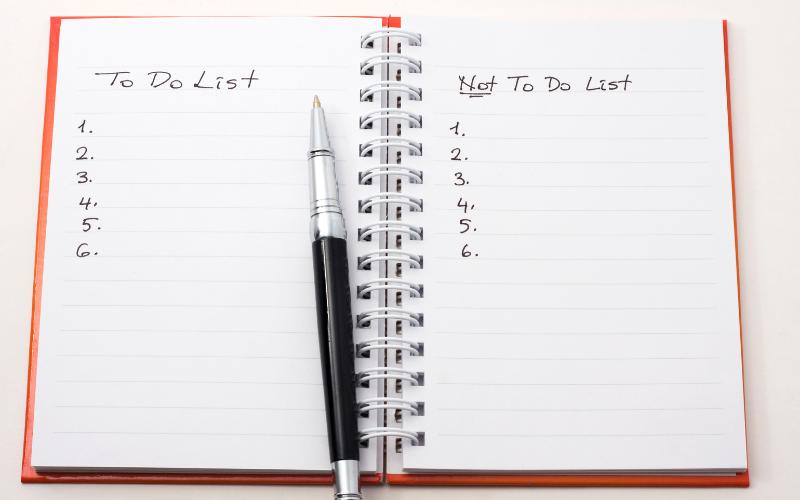
Now that we know the resistance points, let’s talk about how to actually make constraints and setting limitations work for you.
Step 1: Choose One Area to Apply Constraint
Start by picking just one small area of your life to experiment with constraint. Instead of aiming for big, sweeping changes, focus on a low-pressure opportunity where constraint might be helpful.
Here are some examples to consider:
- Limit your daily to-do list: Choose just three key tasks to focus on each day. Instead of feeling pulled in a million directions, constraint helps you zero in on what will really move the needle.
- Set a 30-minute time block for focused work: Rather than thinking, “I have to finish this huge project today,” shift it to, “I’ll just focus on this for the next 30 minutes.” That smaller window makes it feel doable and gets you moving.
- Batch your email check-ins: Instead of keeping your inbox open all day, choose two dedicated times to check it—like 10 AM and 3 PM. This small constraint frees up mental space and reduces the temptation to bounce between tasks.
Mindset Shift: This is just an experiment, not a permanent commitment. Test what helps and adjust from there.
Step 2: Make It Dopamine-Friendly
Constraints don’t have to be boring. By making it fun and engaging, constraint can give us a dopamine boost by creating challenges for our brains.
Think about Legos—they’re constrained to basic shapes that fit together in specific ways, yet we use them to build incredible things. The constraint of basic shapes actually kicks our creativity into high gear.
Here’s how:
- Use a “constraint lottery.” Create a list of preset options for tasks, meals, workouts—whatever area you’re working on. Then, when it’s time to choose, pick one at random. Write options on paper slips, put them in a jar, and pull one out. This adds surprise while keeping you within your chosen limits.
- Use the “Only 3” rule. When faced with too many options, narrow it down to three. For example: “I’ll choose from these three meals today,” or “I’ll pick from these three writing prompts for my newsletter.” Having just three options keeps it simple but still gives your brain the satisfaction of choice.
Why does this work? Because ADHD brains love novelty and clear endpoints. Constraints like these remove the brain’s tendency to spin in overwhelm about the endless options while still giving you that little spark of variety.
Mindset Shift: Constraint makes decisions easier and more engaging by creating opportunities for fun, dopamine-driven success.
Step 3: Reframe It as a Fun Challenge
Treat constraint like a game or creative challenge. Instead of thinking, “I have to stick to this rule,” ask, “How creative can I get inside this limit?”
Here are a few ideas:
- Work Challenge: Set a timer for a 25-minute sprint and ask yourself, “How much can I get done within this window?” Instead of focusing on finishing everything perfectly, make it about progress and speed.
- Meal Prep Constraint: Next time you’re looking at an empty fridge and thinking there’s nothing to eat, challenge yourself: “What meal can I come up with using only what I already have?”
This works because ADHD brains thrive on novelty and problem-solving. When constraint becomes a puzzle to solve, we engage the part of our brain that loves a challenge.
Mindset Shift: Constraint can be a creative playground that gives your brain the opportunity to explore and find unexpected solutions.
Step 4: As Always, Adjust as Needed
Constraint isn’t one-size-fits-all. It’s a tool that works best when customized to fit your needs.
If a constraint feels too tight, that’s not failure—it’s information. The point is to support you, not create stress.
Here are some ways to keep your constraints flexible and adaptable:
- Test & Tweak: Think of every constraint you try as an experiment. If you commit to a 30-minute work sprint but notice you lose focus after 20 minutes, that’s great data! Next time, try a 20-minute sprint instead.
- Think in Seasons: Just like Picasso moved through creative phases—like his Blue Period as we talked about last week—your constraints can shift over time, too. What works in a busy season might not be what you need during slower periods. Think of constraints in seasons, not as forever rules.
Constraint works best when it feels supportive, not suffocating. If it feels heavy, adjust it—make it smaller, looser, or approach it from a new angle.
Mindset Shift: Constraint is a flexible tool that evolves with you. Find that sweet spot where you feel supported while having space for creativity and growth.
Challenge: Try One Small Constraint This Week
This week, pick one small way to test structure and constraint in your life. This isn’t about overhauling your entire schedule or locking yourself into some rigid system. It’s about trying one, low-pressure experiment.
Maybe it’s:
- Limiting your to-do list to three main tasks each day
- Setting a 10-minute timer to tackle one small part of a bigger project
- Choosing just one theme to focus on in your content or creative work for the week
- Committing to batch cook three meals using only what’s already in your fridge
As you try your constraint, notice what resistance comes up and practice reframing it.
Remind yourself:
- This is an experiment, not a rule.
- I can adjust this if it stops working.
- Constraint isn’t about doing less—it’s about doing what matters more effectively.
The truth is, constraint doesn’t hold us back. It points us in the right direction. It gives us a framework to focus, create, and actually finish the things we start.
After a week, notice what changed. What felt easier? What felt harder? What’s worth tweaking?
That’s how constraint works for ADHD brains—through flexibility, curiosity, and play.
👉 Want to take these concepts further and apply them to your life? Learn more about how we can work together with my small group coaching program, “We’re Busy Being Awesome,” and one-on-one coaching.
✨ Learn my simple step-by-step approach to locking in a routine and making it stick, be sure to check out my free course, the ADHD Routine Revamp.
I’ll talk with you soon.
Links From The Podcast
- Learn more about private coaching here
- Learn more about We’re Busy Being Awesome here
- Get the top 10 tips to work with your ADHD brain (free ebook!)
- Discover my favorite ADHD resources
- Get the I’m Busy Being Awesome Planning System
- Get the I’m Busy Being Awesome Podcast Roadmap
- Take my free course, ADHD Routine Revamp
Some of the links included are affiliate links, which means I will earn a commission if you purchase through them. I only recommend resources and products that I personally use and love. Thanks for your support!
Leave IBBA A Rating & Review!
If you enjoy the podcast, would you be a rockstar and leave a review? Doing so helps others find the show and spreads these tools to even more people.
- Go to Apple Podcasts
- Click on the I’m Busy Being Awesome podcast
- Scroll down to the bottom of the page, where you see the reviews.
- Simply tap five stars; that’s it!
- Bonus points if you’re willing to leave a few sentences sharing what you enjoy about the podcast or a key takeaway from the episode you just heard. Thanks, friend!


About Paula Engebretson
ADHD COACH | PODCASTER
I spent the first 31 years of my life thinking I just needed to “try harder” while dealing with crushing self-doubt, perfectionism, and imposter syndrome. Then I was diagnosed with ADHD.
Finally understanding the missing puzzle piece, I discovered how to work with my brain, build upon my strengths, and take back control of my life.
Now I help others with ADHD do the same. Learn more.